

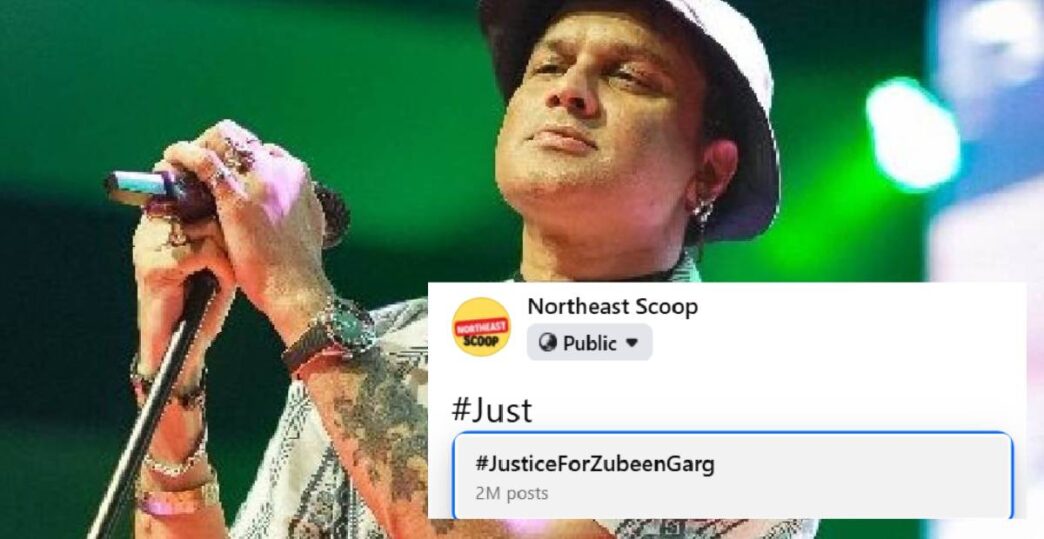
The digital movement demanding justice for the late Assamese singer Zubeen Garg has now become the world’s largest online campaign, crossing over 2 million uses of the hashtag #JusticeForZubeenGarg. What started as a heartfelt initiative by Zubeen’s fans in Assam has now captured the attention of people across the globe, turning into a historic online movement.
The campaign, launched after Zubeen Garg’s sudden death on September 19, 2025, in Singapore, aims to demand truth and transparency regarding the circumstances of his death. Fans and supporters worldwide are uniting under the hashtag, making it perhaps the first-ever and unique digital movement of this scale. According to social media analysts, no campaign of this magnitude and emotional intensity has been witnessed before.
Earlier, on October 16, the hashtag had already reached 1.4 million uses, reflecting the rapid growth of the movement. In just three days, it surged past the 2 million mark, showing the unwavering determination of Zubeen’s fans to seek answers. 
The campaign began as a response to the news of Zubeen Garg’s death during a scuba-diving trip in Singapore, where he had gone to perform at the North East India Festival. While authorities described it as an accident, many fans felt the explanation was too simple and did not align with the singer’s careful and lively nature. Questions about the events on the yacht, the people present, and the handling of the situation quickly spread on social media.
From Instagram and X (Twitter) to Facebook and YouTube, thousands of posts, videos, and tributes poured in. Within days, the hashtag became the voice of a generation, demanding accountability. The movement soon moved beyond social media. Candlelight marches, musical tributes, and peaceful protests began across Assam, with people taking to the streets to amplify their call for justice.
In Charaideo district’s Mahmara, a massive rally led by the Tai Ahom Students’ Union saw thousands singing Zubeen’s songs and raising banners reading “We want justice.” In Baksa district, tensions flared during protests outside the district jail as authorities moved five accused persons into custody. Stone-pelting and clashes forced the administration to impose Section 144, highlighting the deep emotions attached to the campaign.
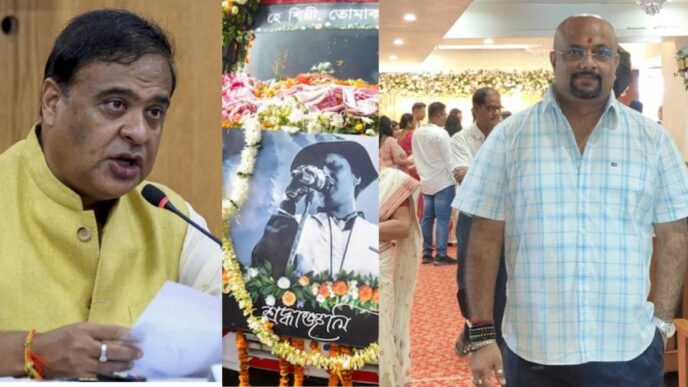
To understand the depth of the campaign, one must understand the influence of Zubeen Garg. For over two decades, he was the cultural face of Assam, singing in Assamese, Hindi, Bengali, and other languages, and bringing the Northeast into national prominence. From his iconic songs like Mayabini Ratir Bukut to Ya Ali, his music resonated with millions. His sudden death struck the people of Assam personally. When his body returned to Guwahati, thousands lined the streets in mourning, shops were closed, and the city came to a standstill.
Zubeen’s wife, Garima Sakia Garg, has publicly called for a fair and transparent investigation. Many artists and friends from the film and music industry have joined the campaign online, posting emotional notes and urging that Zubeen’s voice should not fade away without answers.
The hashtag continues to trend worldwide, connecting Assamese communities from London to Dubai and the United States. Online concerts, poetry readings, and live-streamed candlelight vigils are now part of the movement. In Guwahati, stickers with Zubeen’s face and the words “Justice for Zubeen” appear everywhere—from markets to auto-rickshaws. Cities like Siliguri and Shillong also see young people sharing reels and posts, keeping the singer’s memory alive and the call for justice strong.
The #JusticeForZubeenGarg movement has surpassed even notable global digital campaigns, proving that love, unity, and determination can turn grief into one of the largest social media movements the world has ever seen. What began as a small tribute has now become a historic call for justice, making Assam the birthplace of a global digital movement.