


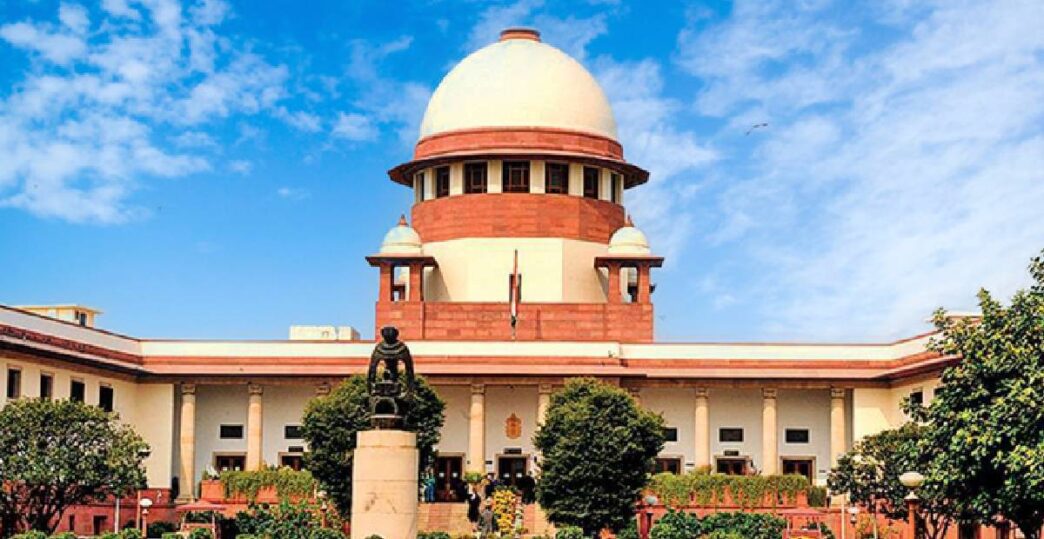
The Supreme Court of India has delivered a landmark judgment, making it clear that anyone who is arrested must be provided with the grounds of their arrest in writing and in a language they understand. The apex court emphasized that this requirement applies to every case, regardless of the nature of the offence or the law under which the arrest is made.
A Bench led by Chief Justice of India B.R. Gavai and Justice Augustine George Masih said that the written grounds must be supplied within a reasonable time, and in any case, at least two hours before the accused is produced before a magistrate for remand proceedings. “Mere communication of the grounds in a language not understood by the person arrested does not fulfil the Constitutional mandate under Article 22,” the court observed. Failure to provide such grounds in writing could render both the arrest and remand illegal, and the person would have to be set free.
The judgment arose from a high-profile case of a BMW hit-and-run in Mumbai in July 2024, in which a woman tragically died. The driver, along with co-accused individuals, was arrested, but the grounds of arrest were not immediately provided in writing. The accused challenged this procedure, arguing that it violated constitutional protections. 
Justice Masih explained that informing a person of the reasons for their arrest is not a mere formality. It is a fundamental safeguard meant to protect personal liberty under Articles 21 and 22 of the Constitution. The Bench noted that providing grounds of arrest in writing allows the accused to consult legal counsel, challenge the arrest, oppose police custody, and seek bail effectively.
The court clarified that in exceptional cases, such as when an offence is committed in the presence of police or during an ongoing crime, grounds may initially be communicated orally. However, even in these situations, the written grounds must be supplied within a reasonable time and no later than two hours before remand proceedings. Magistrates must be informed if there is any delay in providing the written grounds.
The Supreme Court referred to earlier judgments, including Pankaj Bansal v. Union of India (2023), Prabir Purkayastha v. State of Delhi (2024), and Vihaan Kumar v. State of Haryana (2025), which reinforced that informing an accused person of the grounds of arrest is an essential step and not a procedural technicality. The court emphasized that this safeguard protects the dignity, liberty, and social well-being of individuals, while also allowing families and friends to act promptly if needed.
The Bench also stressed that police must be careful while making arrests. Arresting someone unnecessarily or without proper investigation can cause psychological, social, and reputational harm. The judgment noted that providing written grounds in the language of the arrestee benefits both the accused and the investigating agency, as it ensures transparency and accountability.