

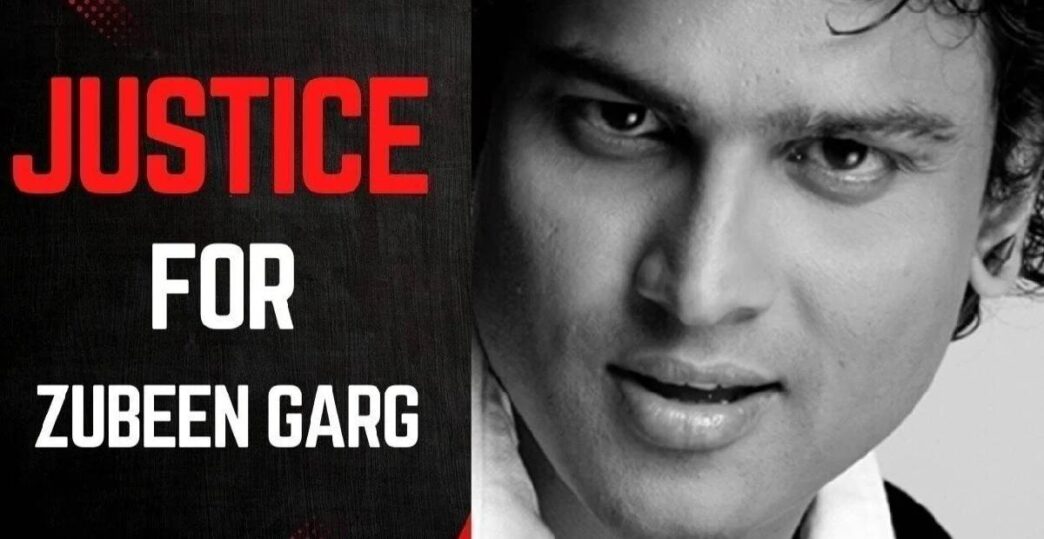
Assam is witnessing an emotional storm. The death of singer and cultural icon Zubeen Garg, lovingly called Zubeen Da, has left the entire Northeast in shock and sorrow. What started as mourning has now turned into a mass movement the #JusticeForZubeenGarg campaign which has crossed 5 million mentions on Facebook alone, becoming one of the biggest digital movements in Assam’s history.
Zubeen Garg, who passed away on September 19, 2025, at the age of 52, was more than a singer. He was the voice, spirit, and pride of Assam. Born in Jorhat in 1972, Zubeen created over 38,000 songs in more than 40 languages, from soulful Assamese melodies to Bollywood hits that carried the sound of the Northeast across India. His songs were not just music they were emotions, stories, and identity.
Zubeen Da was also known for his compassion and courage. Together with his wife Garima Saikia Garg, he adopted 15 children, helped in flood relief drives, rescued animals, and often spoke fearlessly against corruption. “Humanity matters more than rituals,” he once said ; a line that many fans now share online as his eternal message. 
Zubeen had travelled to Singapore to perform at the North East India Festival. On that tragic day, he went swimming with friends near Lazarus Island. Witnesses said he was wearing a life jacket when he suddenly went missing in the water. Authorities ruled it an accidental drowning, and the first post-mortem confirmed no trace of poison.
His body was brought back to Assam, where thousands gathered for his final rites in Kamrup district on September 23. The state funeral with a 21-gun salute was both a farewell and a promise; a promise that his voice would never be forgotten.
But questions soon began to rise. How could a strong swimmer like Zubeen suddenly drown? Why were there so many people around, yet no one could save him? And why were details of the incident so unclear?
Social media exploded with doubts. Many suspected foul play and demanded answers. Over 60 complaints reached the Assam Police in the first week itself. Fans across the world started writing “Zubeen Da didn’t just drown; he was silenced.”
The online campaign #JusticeForZubeenGarg began on October 5, when actress Amrita Gogoi posted a heartfelt message: “We owe him the truth.” Within hours, thousands joined. Artists, students, and fans began sharing his songs, pictures, and protest posters. Candlelight vigils were held in Guwahati, Jorhat, and Tezpur. By early November, the campaign had already touched 5 million mentions on social media.
What makes this campaign different is its unity. People from all walks of life farmers, students, singers, politicians, and the Assamese diaspora in Singapore have joined hands to demand a fair investigation.
The growing public anger pushed the government to act. Chief Minister Himanta Biswa Sarma visited Zubeen’s family and announced a Special Investigation Team (SIT) led by Special DGP M.P. Gupta. The CID registered a murder case under relevant sections of the Bharatiya Nyaya Sanhita.
The investigation soon led to a series of arrests, including Zubeen’s manager Siddhartha Sharma, festival organizer Shyamkanu Mahanta, drummer Shekhar Jyoti Goswami, and others. Police also found financial irregularities and unaccounted transactions worth over Rs 1.1 crore.
Adding to the controversy, Assam’s Chief Information Commissioner Bhaskar Mahanta resigned on November 6 after questions arose about funds linked to his brother, one of the accused. “To avoid conflict,” he said, but the timing raised eyebrows.
Even national political figures like Congress leader Mallikarjun Kharge and BJP MP Dilip Saikia have spoken out. Chief Minister Sarma himself declared, “If we fail Zubeen Da, don’t vote for us in 2026.”
Singapore police maintain that Zubeen’s death was accidental. A second autopsy at Gauhati Medical College also found no poison. Yet, many fans remain unconvinced. They believe key facts are being hidden.
Musician Shekhar Goswami, who was present during the incident, changed his statement several times first calling it an accident, then claiming Zubeen was poisoned. Such contradictions have only deepened public doubt.
Meanwhile, critics accuse politicians of using Zubeen’s death for electoral gain, linking it to larger political narratives in Assam. Despite that, the campaign’s strength lies not in politics but in people’s emotion a collective cry for truth.
Across Assam, tributes continue to pour in. Air Force jets performed a tribute flypast over Lachit Ghat. In Rangia College, students clashed with activists over posters mocking the campaign. Despite controversies, Zubeen’s last film “Roi Roi Binale” continues to draw full houses, proving that his artistic spirit still connects deeply with the people.
In Singapore, members of the Assamese community lit virtual candles, while artists in Guwahati painted murals of Zubeen smiling with his guitar. From Shillong to Silchar, from tea gardens to city cafes, his songs play endlessly not as background music, but as memories.
Garima Saikia Garg has urged peace and patience. “Let the truth sing loudest,” she said.
The #JusticeForZubeenGarg campaign has turned grief into strength. It has shown how art can unite people beyond borders, caste, or politics. It is no longer just about one singer’s death it’s about the fight for truth, transparency, and accountability.
As Assam continues to wait for answers, one thing is certain: Zubeen Garg’s melody will never fade. His voice, his songs, and his message of humanity will keep inspiring generations.
Zubeen once sang, “Mayabini, more naam xun, ami xopun dekhu… “O enchanted one, hear my name, for we still dream.”
Today, 5 million people are dreaming together of justice, peace, and a melody that will never die.