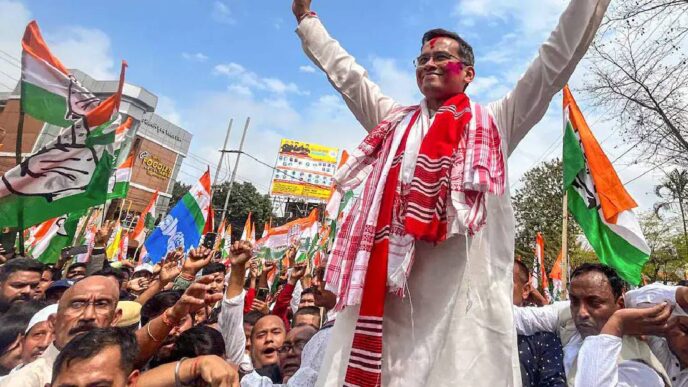



For more than thirty years, six of Assam’s long-established communities have been asking for inclusion in the Scheduled Tribe (ST) list. The Tai Ahoms, Morans, Motaks, Chutias, Koch-Rajbongshis, and Tea Tribe Adivasis have repeatedly submitted memorandums, met ministers in Delhi and Dispur, and organized large demonstrations across towns and villages. Every government has acknowledged that their claim has merit, yet a final decision has never been made.
The delay is striking, especially when compared to how quickly the state has acted on other sensitive matters. In 2019, when the Citizenship Amendment Act directly affected Assam, the government moved fast despite widespread protests. Five young men lost their lives in Guwahati during demonstrations. Yet the law passed through Parliament within months. In contrast, the ST demand has remained pending for decades despite clear constitutional provision under Articles 341 and 342, which allow Parliament to revise the SC and ST lists through ordinary legislation.
The initial steps for these six communities have already been completed. The Assam government recommended their inclusion, and both the Registrar General of India and the National Commission for Scheduled Tribes have examined the cases. The obstacle is not the Constitution but political will. Over the years, committees have been formed, reports released, and promises made in election manifestos, yet no final action has been taken. 
Partial arrangements have been made in the past, such as the creation of the Moran, Matak, and Kamatapur Autonomous Councils in 2020. However, these councils had narrow mandates, weak financial provisions, and left three communities entirely outside the scheme. While they created the appearance of progress, they did not address the core demand for ST recognition.
These six communities are integral to Assam’s history and society. The Tai Ahoms shaped political and administrative life in Upper Assam, while the Koch-Rajbongshis have long been part of the western and central plains. Recognition as Scheduled Tribes would provide stability, reduce identity-based competition, and offer certainty to communities that have been waiting across generations.