

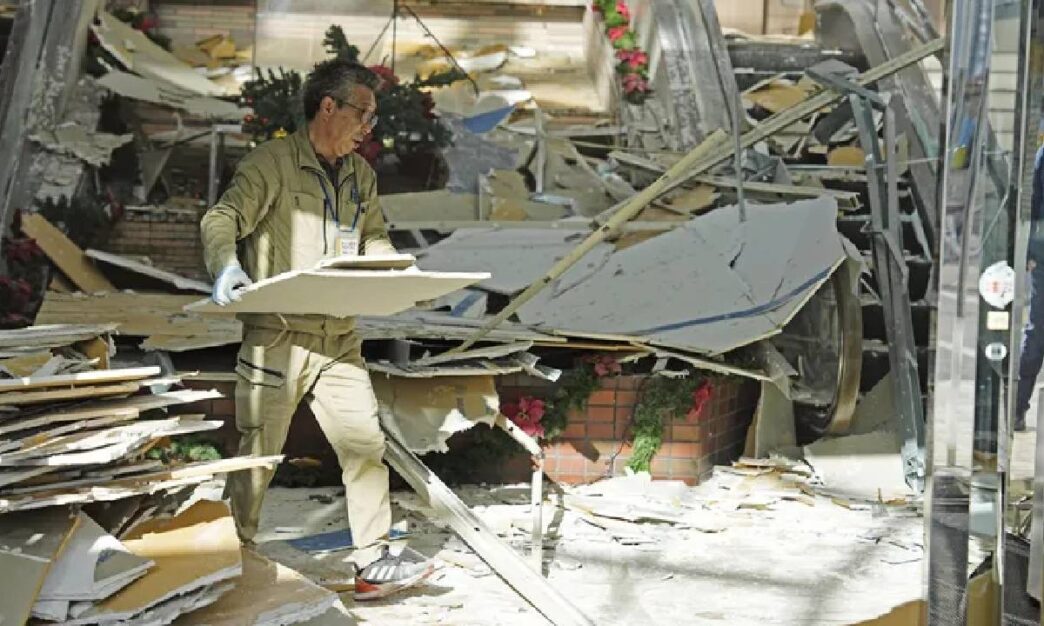
A strong earthquake of magnitude 7.5 struck off the northern part of Japan late on Monday night, leaving at least 23 people injured and sending small tsunami waves to a number of coastal towns. The authorities said the quake took place shortly after 11 pm in the Pacific Ocean near the Aomori region, which is the northern tip of the main Honshu island.
Officials said the tsunami waves were around 70 centimetres in Kuji port in Iwate, while some other coastal areas recorded waves of around 50 centimetres. People living along the coast were asked to move to higher areas and avoid the shoreline until the warnings were lifted.
The Japanese government said it was still collecting full details of the damage. Chief Cabinet Secretary Minoru Kihara advised people not to return to low-lying areas too soon, as aftershocks were expected. He urged residents to go to safer places and remain alert. 
Local television channels showed videos of lights shaking in homes and buildings. Some residents told broadcasters that they felt long and heavy shaking. NHK reported that several people were hurt at a hotel in Hachinohe and one person in the Tohoku region was injured when his car fell into a hole created during the tremor.
Officials confirmed that around 800 houses temporarily lost electricity. Bullet train services and some local trains were also stopped for checks. Authorities said nuclear plants in the region began emergency inspections. At one reprocessing plant in Aomori, a small amount of water spilled from a cooling facility, but officials said it did not pose any danger.
More than 400 people took shelter at a nearby air base and the defence ministry sent helicopters to survey the situation. Local reports also said that around 200 passengers were stranded overnight at New Chitose Airport in Hokkaido as train and flight services were affected.
Japan is located in a very active seismic zone and experiences frequent earthquakes. Experts say the country sits where several major tectonic plates meet, causing strong quakes from time to time. The Japan Meteorological Agency warned that more tremors could follow and there was a chance of stronger shocks.