

Eviction notices issued by the Forest Department in the Jamuna–Moudenga Reserved Forest area have created fear and confusion among villagers in Assam’s Doboka area of Hojai district. What started as a move to clear alleged encroachments has now led to allegations that some local brokers are demanding money from families, claiming they can stop the eviction.
According to villagers, an organised syndicate has emerged soon after the notices were served. These brokers are allegedly going door to door, asking families to pay around ₹10,000 each. In return, they claim they can “manage” the situation and prevent houses from being demolished. For many families, already living with uncertainty over land rights, the demand has added a new layer of anxiety.
Several residents told reporters that the brokers present themselves as people with links to the administration. They reportedly assure families that those who pay will be spared, while those who do not cooperate risk immediate eviction. Villagers say this has created panic, especially among daily wage earners and small farmers who have limited means and little access to legal help. 
Makaddus Ali, a resident of the area, said the situation feels like a betrayal of public trust. “Some local people are running a syndicate and openly saying they can stop the eviction drive if we pay ₹10,000,” he said. “We have learned that a hearing related to patta land cases is scheduled in the Gauhati High Court on December 17. Even then, there is no clear information on when the eviction will happen or on what legal basis. Despite this, money is being demanded.”
Ali questioned why residents should be threatened when legal processes are still ongoing. He said his name appears in the National Register of Citizens (NRC) and insisted that any eviction should follow proper inquiry and due process. “We are Indian citizens. There must be transparency. The Doboka MLA and the district administration should step in immediately,” he added.
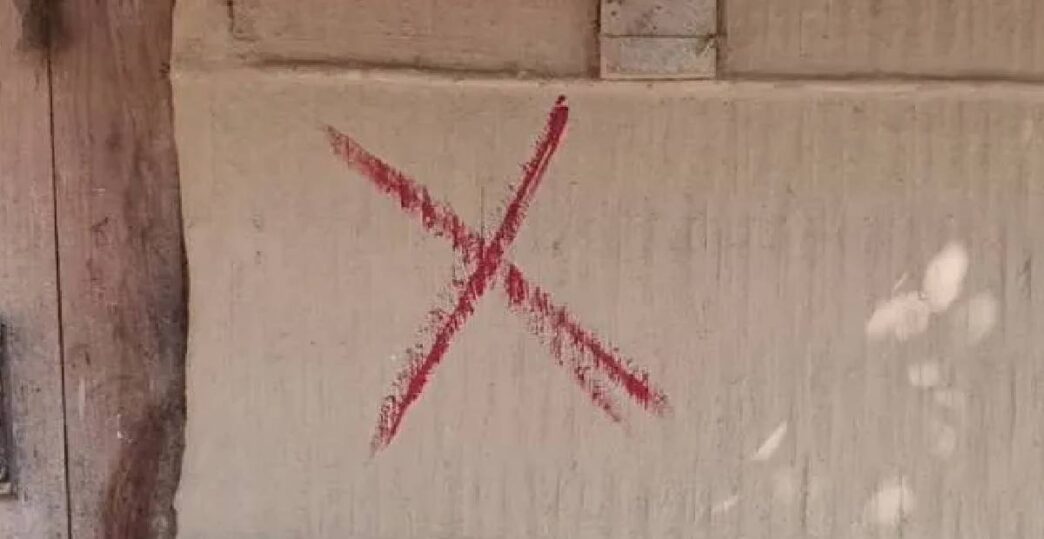
Another villager, Abdul Karim, described a more disturbing experience. He said officials had marked his house with a red cross, a symbol commonly associated with imminent eviction. “I have two cases pending related to land, and another case filed by me is under trial in the Gauhati High Court,” Karim said. “Despite this, my house was marked for eviction.”
Karim said he questioned why his house was marked while others with similar legal status were not. “I was told that if I wanted to stop the eviction, I would have to pay money. The amount ranged from ₹5,000 to ₹20,000,” he alleged. “Those who could not pay were marked with red signs. Some people from our own village are said to be involved. If forest officials are questioned properly, the truth will come out.”
Residents say the red markings have become a source of fear rather than a clear administrative step. Families claim they are unable to sleep properly, worried that demolition teams could arrive without warning. Many households include elderly people, women, and children, making the uncertainty even harder to bear.
At the heart of the issue is a lack of clarity over land ownership. Villagers say it is still not clearly established who among them are original patta holders and who may be living on forest land without valid documents. Several residents claim to have applied for land rights or to be involved in long-running legal disputes. Despite this, eviction notices were issued, and markings appeared even as court cases remain pending.