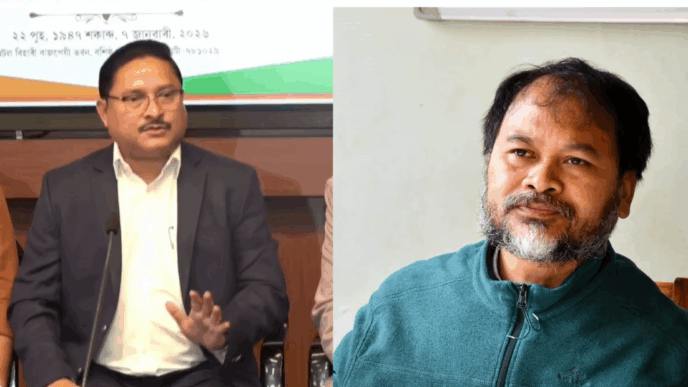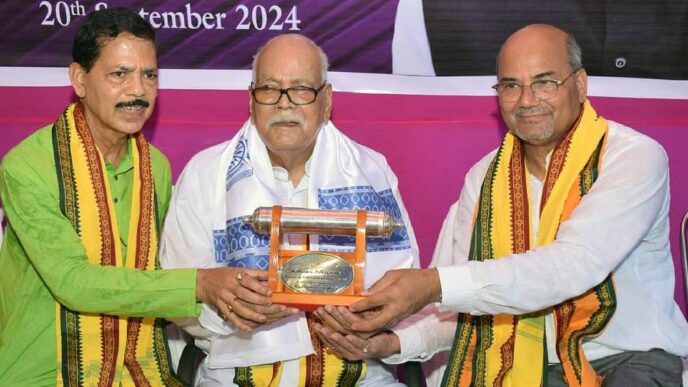

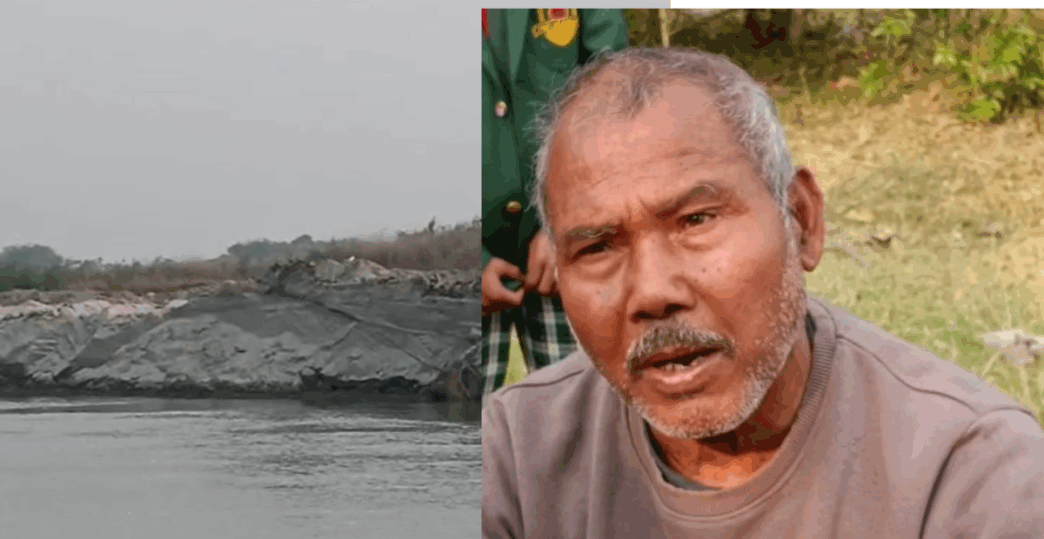
The Forest Man of India, Jadav Payeng, has accused Jorhat forest officials of ignoring Mulaikathoni, allegedly treating it as his “private forest” rather than a protected ecological asset. According to Payeng, this attitude led to official apathy, weak monitoring, and failure to prevent damage to one of Assam’s most important riverine forests.
He said that Mulaikathoni was never created for ownership or fame, but as a people-led conservation effort meant to protect the fragile Brahmaputra ecosystem and safeguard Majuli’s future. His remarks raise serious questions about environmental governance, institutional responsibility and accountability in the region.
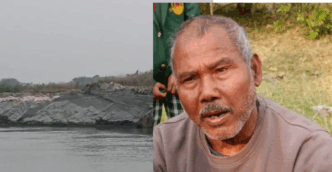
Environmental activist Jadav Payeng, who created the famous Molai Forest (Molai Kathoni) on Majuli island, further alleged that illegal sand extraction is taking place in and around forest areas, while authorities have failed to respond. Payeng said that earlier, Deputy Commissioners, Divisional Forest Officers and Rangers used to visit the area, but the present officials rarely come to see the condition of the forest. He said he only wants the current administration to visit the site and understand the ground reality. “Forget everything else, at least come and see the forest,” he said, urging officials to treat Mulaikathoni as a shared ecological responsibility rather than an ignored patch of land. 
According to Payeng, sand is being taken out and money is being made from it, and the extracted sand is being transported as far as Sivasagar. He alleged that he has even been threatened by a DFO over the issue. Payeng further said that the land falls under a former Central Government scheme, and the scheme is now over, so he does not understand why the State Forest Department still claims control. He added that the royalty paid to the government is only ₹1, while outside the sand is sold for ₹10. He also criticised the appointment of certain officials in Jorhat, saying some officers do not fully understand local conditions. Referring to earlier meetings, he said that papers were once signed linking his forest with Kaziranga and Dibru-Saikhowa, and officials from Majuli had signed as well. But later, confusion arose when someone referred to the forest as “private land”, leading to the question — “Is the elephant private? Is the deer private? Is the rhino private?” Payeng expressed regret that some officials appeared unaware of ground realities.
Payeng also raised strong concerns over what he describes as the growing influence of soil and sand mafia in Jorhat district. In an exclusive conversation with Northeast Scoop, he said that large-scale soil extraction is harming natural habitats, wildlife areas and village surroundings, and that the administration has failed to stop it.
He said that one natural area, including a chapori where birds and animals used to stay, has already been dug up for soil extraction. According to him, many parts of the riverbank and surrounding land are slowly being damaged because of continuous digging and removal of soil.
He also claimed that the administration in Jorhat has become weak when it comes to taking action against such activities. Payeng said that many senior officers posted in the district belong to other states and therefore do not have the same emotional or cultural attachment to the land, forests and rivers of Assam. He believes that if more Assamese officers handled key positions, they might feel a deeper sense of responsibility towards protecting local ecosystems.
Payeng said that “money mafia” and “soil mafia” activities have slowly grown in Jorhat, and this has had a bad impact on both people and nature. “This is why our condition has become like this,” he said, adding that future generations must learn to protect the land instead of misusing it.
He also shared a past incident involving financial support for plantation work. Payeng said that a Member of Parliament from Telangana once offered him Rs 25 lakh for tree plantation. However, the district administration at the time reportedly stated that the proposed plantation site fell under Majuli’s jurisdiction and refused to accept the money.
According to Payeng, the funds were not transferred to Majuli either, and were instead returned to Telangana. Later, the MP again expressed willingness to support him directly, but Payeng declined because plantation work requires a proper season, and he said there was no point in receiving funds when tree saplings could not be planted immediately.
He said he did not want to accept responsibility for spending money when the climatic conditions were not suitable for plantation. Tree planting, he stressed, must follow nature’s cycle.
Throughout the conversation, Payeng appeared deeply worried about what he sees as unchecked land and resource misuse. He said local communities used to live with rivers and forests in a more balanced way. But now, in many areas, riverbeds have been dug up for kilometres for soil extraction, which he believes has permanently altered the flow and health of the rivers.
He also raised questions on whether the Forest Department has taken strong steps to control illegal activities. He suggested that in the past, officers such as DFOs or rangers would have taken firmer action. Today, he feels that either investigations are slow or action is not visible on the ground.
Another issue he mentioned is confusion over land ownership, private settlements and administrative responsibilities. According to him, ordinary villagers often do not know who exactly is responsible for regulation and monitoring. This confusion, he believes, helps illegal activities continue.
Payeng also said that many families depend on selling soil or land-related products because it brings quick income. However, this has long-term environmental risks, and he fears the consequences will be felt by future generations. He added that while the government may receive royalties, the environmental cost cannot be ignored.
During the conversation, he expressed helplessness at times, saying that he is deeply worried about the future of the land, rivers and communities. He also mentioned that some people have suffered due to water shortage, yet proper solutions and planning appear to be missing.
Payeng said leaders and departments should visit affected areas and understand the ground reality directly. He believes that unless officials listen to people and see the damage themselves, real change will not come.
He also spoke emotionally about his connection to nature, reminding that he has dedicated his life to forest and tree conservation. He said he only wants the land and river to survive so that future generations can live safely and peacefully.