
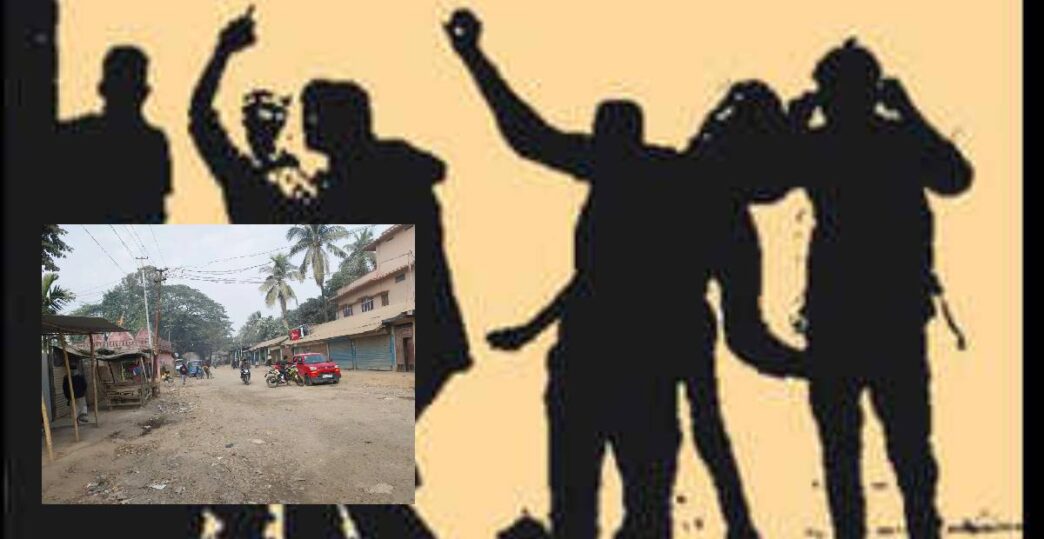
Tension spread in parts of Meghalaya’s West Garo Hills district after a young man was beaten to death at Rajabala, creating fear among local people and migrant workers.The incident, which took place on January 9, has raised serious questions about law and order, safety of citizens, and the growing pressure on the district administration to act firmly and fairly.
According to official information, the incident occurred around 2 pm at Goalgaon under the jurisdiction of Rajabala Police Station. The victim has been identified as Dilseng M. Sangma, son of Gaban Ch. Marak, a resident of Amokgre village in the Phulbari area. He was allegedly assaulted by a group of people in broad daylight. Another youth was also injured in the same attack and is currently undergoing treatment.
After the assault, Dilseng Sangma was first taken to the Bhaitbari Community Health Centre for emergency care. Due to the seriousness of his injuries, doctors referred him to Tura for better treatment. However, he succumbed to his injuries while being taken to Tura. His death sparked tension in the Garo Hills region, particularly in West Garo Hills and nearby areas. 
Soon after the incident, the Meghalaya Police launched a series of raids in different locations. Within a short span of time, three people suspected to be involved in the killing were arrested. Police officials said investigations are still underway and efforts are being made to identify and arrest others who may have played a role in the attack.
Reacting to the incident, Meghalaya Chief Minister Conrad K. Sangma condemned the killing and described it as tragic and unfortunate. In his statement, the Chief Minister expressed condolences to the bereaved family and assured that strict action would be taken against those responsible.
“Yesterday, there was a very tragic and unfortunate incident in Garo Hills, where one youth lost his life and another was seriously injured. We condemn this act and express our condolences to the bereaved family,” Sangma said. He added that the administration and police were fully engaged and that all those involved in the crime would be brought to justice.
The Chief Minister also appealed to the public to remain calm and maintain communal harmony. He urged people not to believe rumours circulating on social media and asked them to rely only on verified information released by the authorities.
In the hours following the incident, fear spread among non-Garo labourers working in different parts of West Garo Hills and neighbouring districts. Many of them, mostly from Assam, work as daily wage labourers at construction sites, small shops, and local businesses. With rumours spreading and tension rising, hundreds of these workers began leaving the area.
With the support of the Meghalaya administration and police, arrangements were made to ensure their safe return. From late Wednesday night onwards, vehicles were arranged and police personnel were deployed along key routes. Officials said that more than 1,000 labourers have safely reached Mankachar, the border town in Assam, so far.
Labourers who returned said they were relieved to reach home safely but remained worried about their livelihoods. Many of them depend entirely on daily work in Meghalaya and said they hope the situation improves soon so they can return without fear.
Meanwhile, the district administration stepped up efforts to prevent any further escalation. A late-night emergency review meeting was held at the office of the Superintendent of Police in West Garo Hills. Senior officials, including the Deputy Commissioner, Superintendent and Additional Superintendent of Police, Circle Inspector, and representatives of the ACHIK organisation, attended the meeting.
The meeting reviewed the security situation, assessed the progress of the investigation, and discussed immediate steps to maintain peace. Officials said preventive measures such as night curfews and temporary suspension of internet services were being considered if the situation demanded it.
On January 10, a peace meeting was also held at the Conference Hall of the Tura Circuit House to reinforce communal harmony. The meeting was convened by the Deputy Commissioner of West Garo Hills and chaired by Vibhor Aggarwal. It was attended by the Superintendent of Police, senior district officials, religious leaders, and representatives from various social and community organisations, including the Central Puja Committee, Tura Mosque, Senior Citizens Forum, and women and youth groups.
During the meeting, all participants were urged to play a responsible role in maintaining peace. The administration warned against spreading rumours and misinformation, stating that such actions could disturb public order and worsen the situation. Officials assured that law and order were under control and that strict action would be taken against anyone attempting to incite violence or unrest.
At the same time, civil society organisations have raised serious concerns following the incident. The Confederation of Meghalaya Social Organisations (CoMSO) strongly condemned the killing and described it as a result of long-standing administrative failures.
In a statement issued on January 10, CoMSO said the incident was not an isolated case but the outcome of years of unchecked illegal settlement, illegal stone quarrying, and weak enforcement in the plain belt areas of Meghalaya. The organisation claimed that repeated warnings from civil society groups had been ignored, allowing illegal activities to continue unchecked.
CoMSO demanded immediate identification, arrest, and prosecution of all those involved in the killing. It warned that political influence or bureaucratic protection should not be allowed to shield any offender. The organisation also called for the eviction of illegal settlers strictly as per the law and demanded a complete shutdown of illegal stone quarries operating in violation of environmental and mining rules.
The organisation further warned that continued tolerance of illegal activities could alter the social and security fabric of the state, posing a serious threat to indigenous communities. It said public anger was growing and failure to act decisively could further erode trust in government institutions.