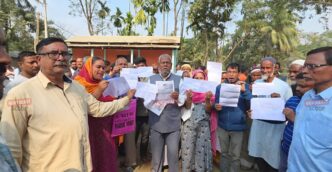

Assam Pradesh Congress Committee (APCC) president Gaurav Gogoi today formally began his political outreach in Lower Assam, marking the start of an intensive campaign ahead of the 2026 Assembly elections. The programme coincided with Silpi Divas and began in Nalbari, where Gogoi said he had come with a renewed resolve to work for what he described as a “Bor Asom” (Greater Assam).
Gogoi’s return to the state followed a late-night meeting in New Delhi with All India Congress Committee president Mallikarjun Kharge and discussions with Leader of the Opposition in the Lok Sabha Rahul Gandhi. Soon after landing in Assam, the APCC chief plunged into ground-level activities, starting with padayatras and public interactions in Nalbari district.
On arriving in Nalbari in the morning, Gogoi first visited Shri Shri Hari Mandir, where he sought blessings before proceeding to Rajiv Bhawan. Addressing party workers and supporters there, he said Silpi Divas had given him fresh energy and purpose. “On this day, I have come to Nalbari with a new determination and with the dream of building a Bor Asom,” he said. 
Gogoi used the occasion to sharply criticise the BJP-led state government, alleging widespread misgovernance. He claimed that development and resources in Assam were being cornered by a small group while ordinary people were left struggling. According to him, issues like land security, education, healthcare and employment were not being addressed for common families.
He alleged that land meant for farmers was being taken away and that even government schemes were not reaching intended beneficiaries. “Instead of helping the children of ordinary families, the government is busy protecting its own people,” he said, adding that public frustration was growing across the state. Gogoi also remarked that leaders who had left the Congress for the BJP would ultimately weaken the ruling party.
Speaking about the upcoming elections, the APCC president said that Silpi Divas had united people in a shared dream for change. He claimed that the mood on the ground suggested people were looking for relief from what he described as concentration of power and misuse of authority.
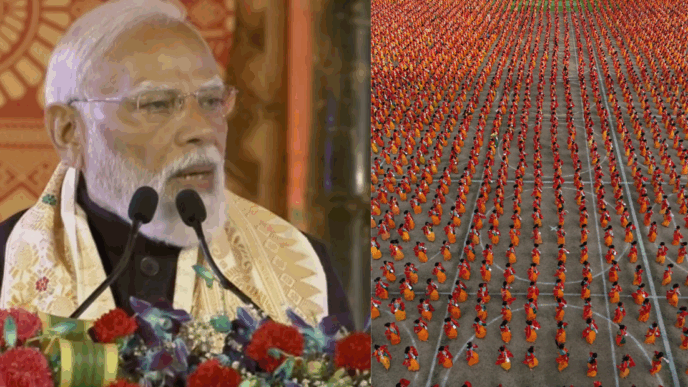
During his interaction with the media, Gogoi also commented on Prime Minister Narendra Modi’s visit to Assam on the same day. While welcoming the Prime Minister, he questioned the priorities of the central and state governments. He said Assam’s most pressing problems continued to be floods and erosion.
Gogoi argued that large sums of money being spent on infrastructure projects could have been better utilised. He referred to an expenditure of around ₹7,000 crore and said that if even a part of this amount had been used for repairing embankments and preventing floods, it would have brought direct relief to people affected year after year.
He also raised concerns about proposed projects like the Kaziranga corridor and elevated highways. According to him, such projects would result in long-term dust and noise pollution and could harm wildlife and water systems. He questioned whether proper environmental studies had been conducted and why such details were not being shared with the public.
A major highlight of Gogoi’s remarks was his demand for national recognition of Assamese cultural icon Zubeen Garg. He urged the Prime Minister to announce the conferment of the Bharat Ratna on Zubeen Garg on the occasion of Silpi Divas. Gogoi said that during earlier visits to Assam, the Prime Minister had not mentioned the artist or visited Zubeen Khetra, and added that this omission had hurt the sentiments of many people in the state.
Later in the day, Gogoi paid floral tributes to the portrait of Rupkonwar Jyotiprasad Agarwala at Rajiv Bhawan to mark Silpi Divas. He also visited the residence of noted literary figure late Dr. Basanta Kumar Bhattacharyya to pay homage.
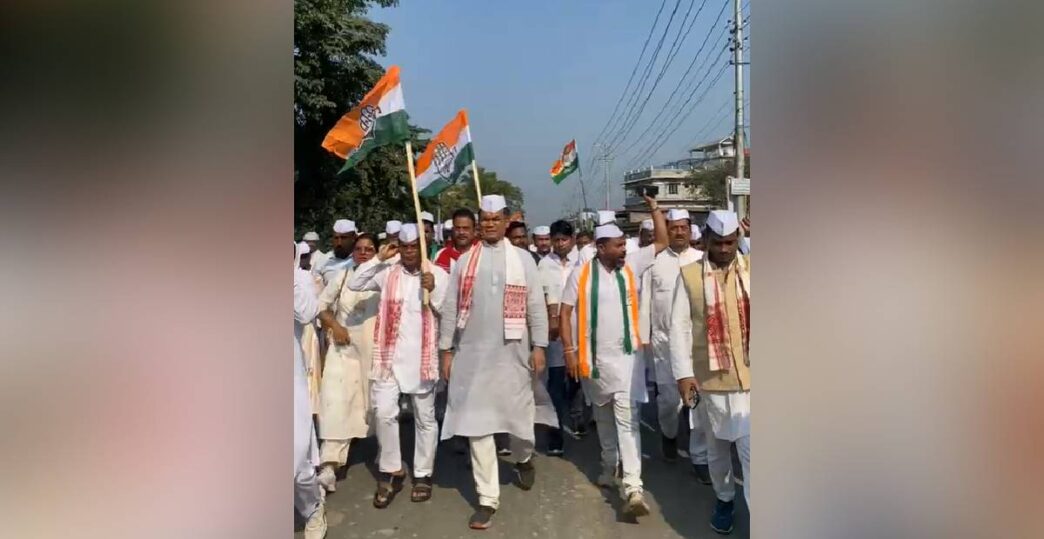
As part of his outreach, Gogoi undertook a nearly seven-kilometre-long padayatra towards the Tihu constituency and addressed an election meeting along the way. He later participated in several programmes in Barkhetri, continuing his interactions with party workers and local residents.