

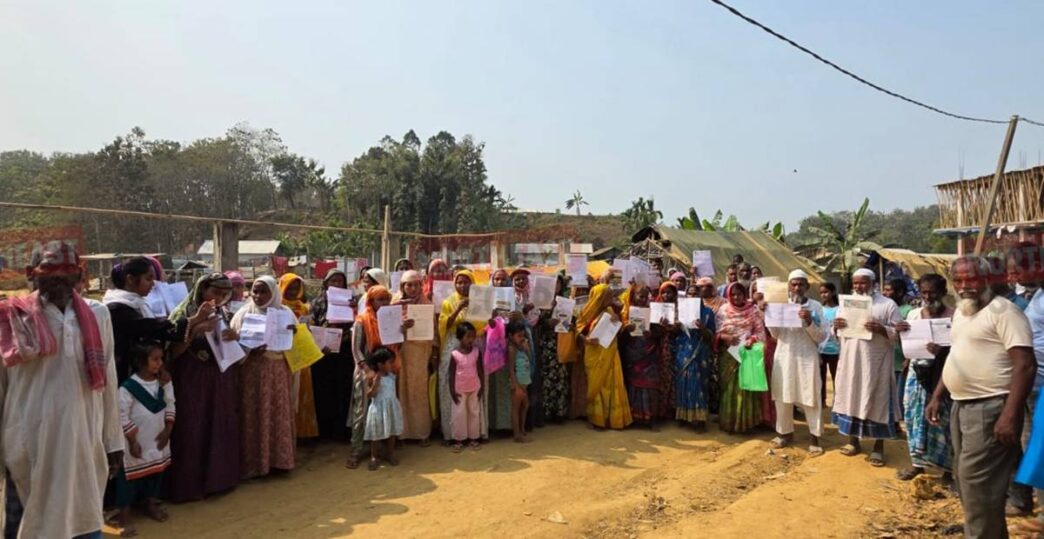
In June 2025, the Assam government evicted 566 families from Hasila Beel in Goalpara district, giving them only two days’ notice to leave their homes. These families were not undocumented settlers. They had NRC records from 1951, 1966 and 1970. They possessed khajana documents, Aadhaar cards, voter IDs and ration cards. For decades, their fathers and grandfathers had lived on that land. Yet within 48 hours, they were forced out. Today, months later, all 566 families are still living under makeshift tents struggling to survive in conditions many say are worse than death.
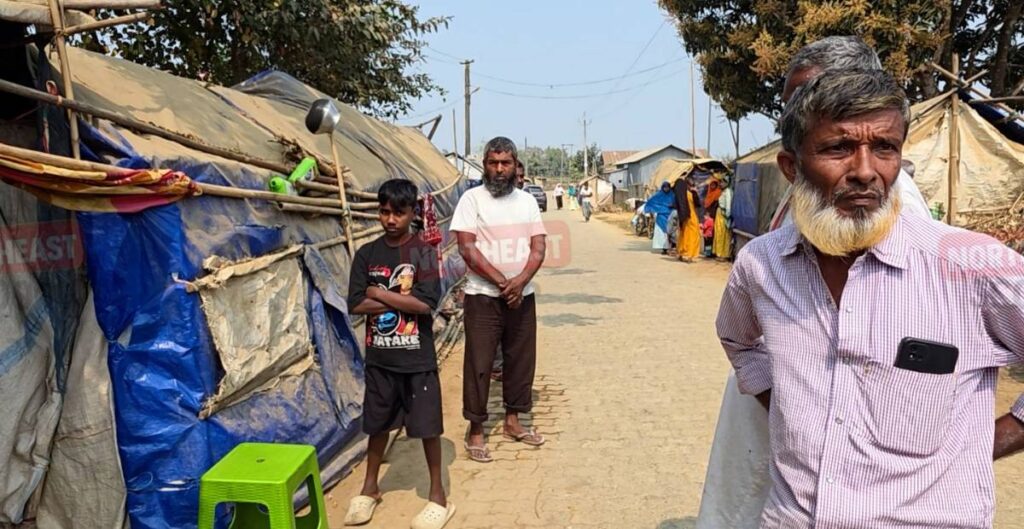
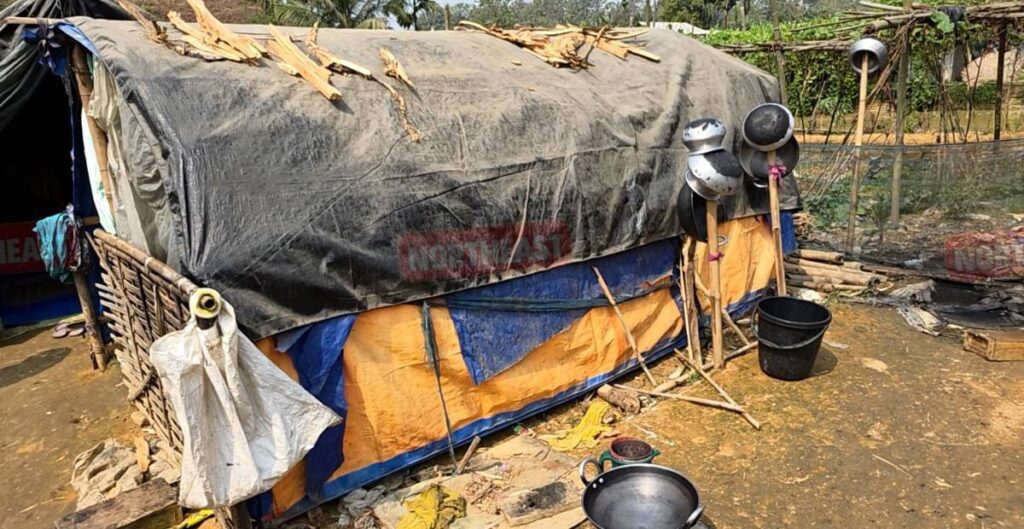
More than eight months have passed. The families now live in four makeshift camps set up on private land given on humanitarian grounds. There is no proper drinking water, no sanitation, no regular medical care, no electricity and no stable shelter. Winter has already passed in plastic tents. Now, summer is approaching.
Residents say their lives have been reduced to survival. “Animals live better,” one of them said. 
When Northeast Scoop visited the camps, the conditions were harsh. Children were seen drinking rice water as a meal. Nearly 500 people shared a single broken toilet. Elderly men sat silently in tents made of plastic sheets. A 17-year-old boy has died. In total, nine people have lost their lives since the eviction. Families fear that more will follow as temperatures rise.
The Gauhati High Court has already intervened. It issued clear directions to the district administration, the Public Health Engineering Department and the Health Services Directorate. The court ordered that potable water, sanitation, medical care and food security under the National Food Security Act be provided. It reminded authorities that Article 21 of the Constitution guarantees the right to life with dignity.
However, residents say those orders have not been implemented. They claim no regular water tankers have arrived. No proper toilets have been built. No consistent medical facilities have been arranged. Rations have not been distributed as directed.
Among the evicted is a practising lawyer, Masum Khandaker from the Goalpara court. He spoke with visible emotion:
“In 2025, on December 16 and 17, the way the government carried out this illegal eviction in our village… I never imagined in my life that I would be evicted like this from my own village and my own state. We never imagined this would happen. We have NRC records from 1951, 1966 and 1970. We had all the khajana documents with us. Suddenly, on December 16 and 17, they gave us only two days’ time and asked us to vacate the land. My father and my grandfathers were born here in Hasila Beel village. After the eviction, I myself, a practising lawyer in the Goalpara court went into depression. I kept asking myself again and again: can the government really evict us like this?
Day by day, as we stay in this camp, nine of our people have died, and more will die — there is no doubt about that. Winter has passed and now summer is coming. Can anyone live in such a camp? It has been more than eight months, and still the Goalpara administration has not taken any information or even taken note of us. What is this? Are we animals? We have been denied our rights. We have been called suspected citizens. But we are genuine citizens since 1951. We feel deeply hurt. We are called suspected voters. If we are suspected voters and not genuine voters, then why are they allowing us to stay here in Assam? Should they not push us back? Why are they keeping us here like this?”
Another resident shared a personal tragedy: “I had a son, Habir Rahman. After eviction, eight months later, he died. He was just 17 years old.”
A woman, Amina Khatum whose husband is paralysed and hospitalised said: “I am in deep pain. My husband is paralysed. He is in hospital. If we are not genuine citizens, how come we have Aadhaar cards? We have voter IDs. We have all the documents. We are living in hell here.”
A young student spoke about her uncertain future: “If I want to continue my studies, I need money. Where will I get it from now? I have two sisters. My father drives a rickshaw. How will I study? What will happen to my future? What will I do? How will I appear for my exams? In these conditions, how can I even study?”
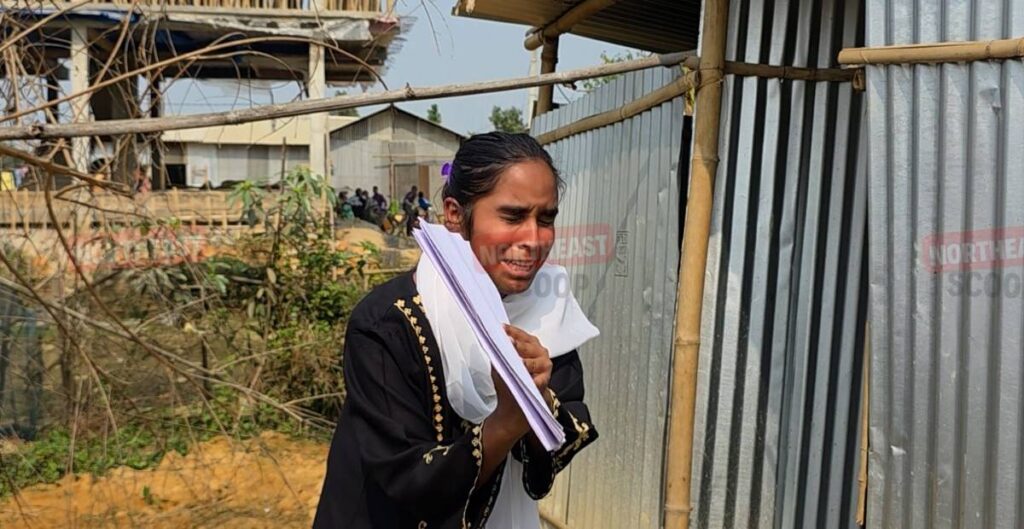
An elderly man said: “I am 70 years old. I have sons and daughters. How can I live like this? We have been here for so many years, and today they have evicted us.”
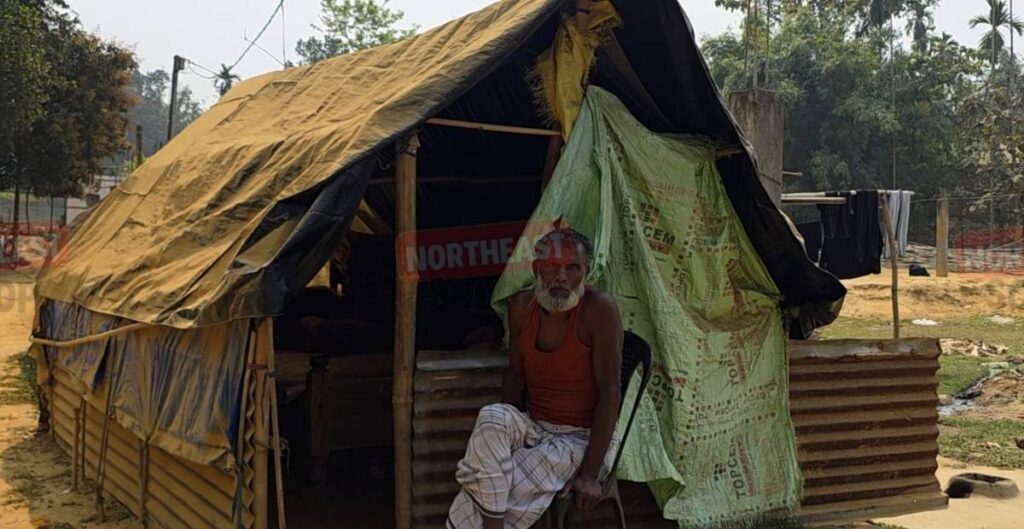
Residents also complain about lack of healthcare. “We don’t have even medicines. Even doctor facilities are not there,” one said. “The doctors and nurses said they will not give us medicines since we have been evicted. We are not allowed water to drink.”
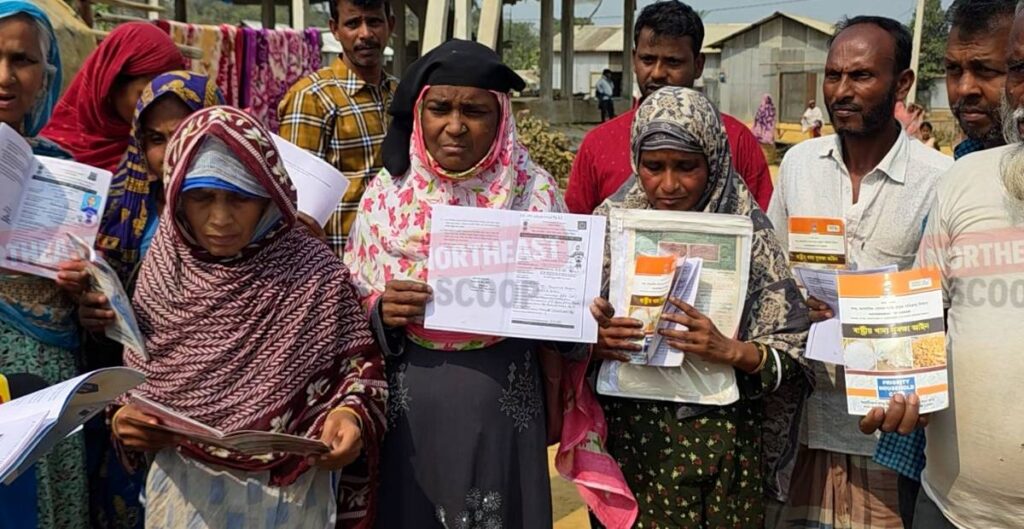
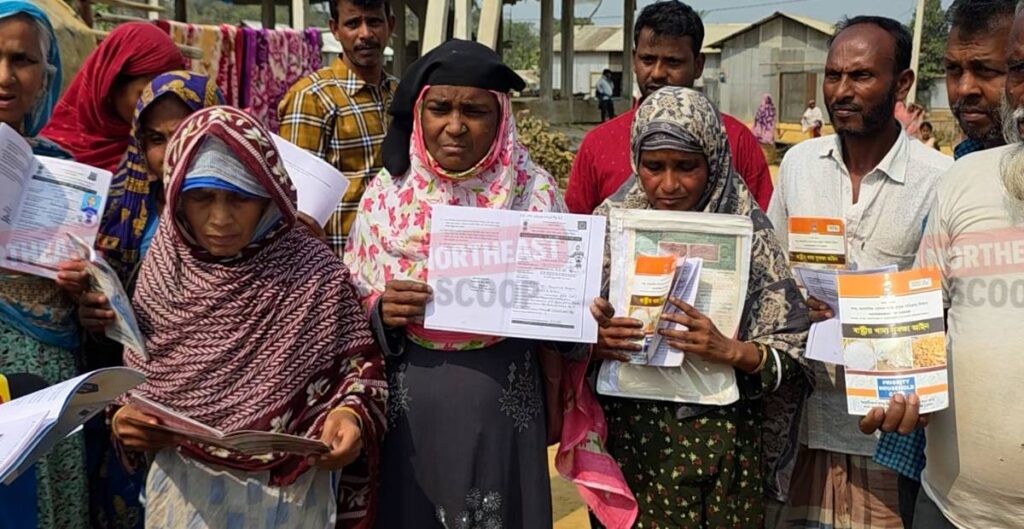
Another woman showed her NRC documents and said: “We have all the documents and still they have evicted us. We have names in the NRC. The government has evicted us, did injustice to us. What is happening?”
Even after the High Court’s order, a camp resident said, “Even after the High Court order, no basic water facilities have been provided. Where are we supposed to get drinking water? What will the small children do? They have no future now. We are being treated like animals. Even if someone wants to come and help us, the Goalpara district administration does not allow them to give us anything. People are afraid, so they do not come here.”
A local resident , Badruddin speaking to Northeast Scoop said that Mushtaq Ahmed Anfar, the Assam State President of the Jamiat Ulema-e-Hind has been helping the families and had given them blankets, clothes and foods. He added “These people have nothing. They don’t have even place to stay. We request the government to put them back to the place where they belong.”
At the relief camp, women held up ration cards and asked: “If they are not Indian citizens, how did we get ration cards?”
Advocate Zunaid Khalid of the Gauhati High Court, who is representing the families, told Northeast Scoop:
“So, the order is specifically directed to all agencies responsible for implementation. Legally, this includes the Director of Health Services, the authorities concerned with food supply, the Public Health Engineering Department and the district administration. They have been asked to provide all the basic rights to the evicted families. We filed this matter seeking directions from the court for safeguarding and implementing the rights of all the persons who were evicted. At present, they are residing in makeshift camps on private land that was given on humanitarian grounds by landowners.
Secondly, for the last eight months since the eviction, they have been living without basic amenities such as drinking water, sanitation, electricity and proper shelter. All these are covered under Article 21 — the right to life with human dignity. There are multiple Supreme Court judgments which clearly state that drinking water, sanitation, shelter and electricity are integral parts of the right to life with dignity.
Regarding the eviction itself, the government does have powers, and the court has limited scope to interfere in such matters. The Supreme Court laid down specific pan-India guidelines in the Jagpal case in 2011 for clearing encroachments from forest areas, grazing fields and government lands. However, even while carrying out such actions, due procedure must be followed. Rehabilitation and relocation must be considered. No one can be abruptly evicted, even if they are occupying government land.
In this case, the Assam government is in contempt of Supreme Court guidelines. In what is being called the bulldozer case, the Goalpara administration is also in contempt. We have filed a contempt petition in the Supreme Court, and it is pending. The government, especially the Goalpara administration, has not filed any reply. The families were given only two days to vacate.”
Advocate Khalid further stated that the government is “at total fault.” He said they have sought compensation of Rs 10 lakhs per family, along with land, issuance of land patta, proper resettlement and rehabilitation.
The central question remains: Are these 566 families citizens or not? If they are “suspected,” how were they issued voter IDs, Aadhaar and ration cards? Why were their names included in the NRC? If they are genuine citizens, why are they being denied basic rights?
As summer approaches, the situation in the camps is expected to worsen. Families say they are not asking for charity. They are asking for the implementation of court orders and for their constitutional rights.
Eight months after the eviction, they are still waiting. They hold their NRC documents in one hand and empty water containers in the other. They say they are not encroachers. They say they are citizens.
And they say they deserve to live with dignity.