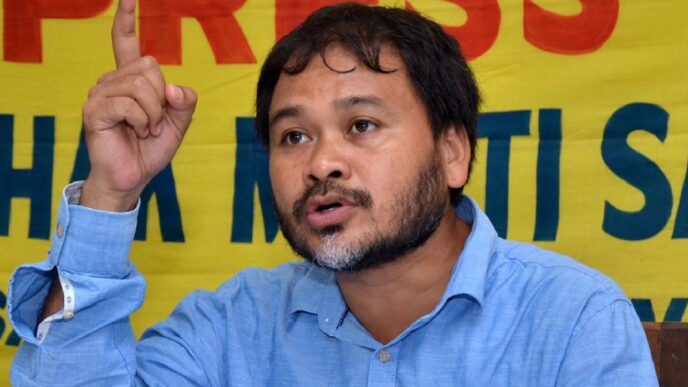

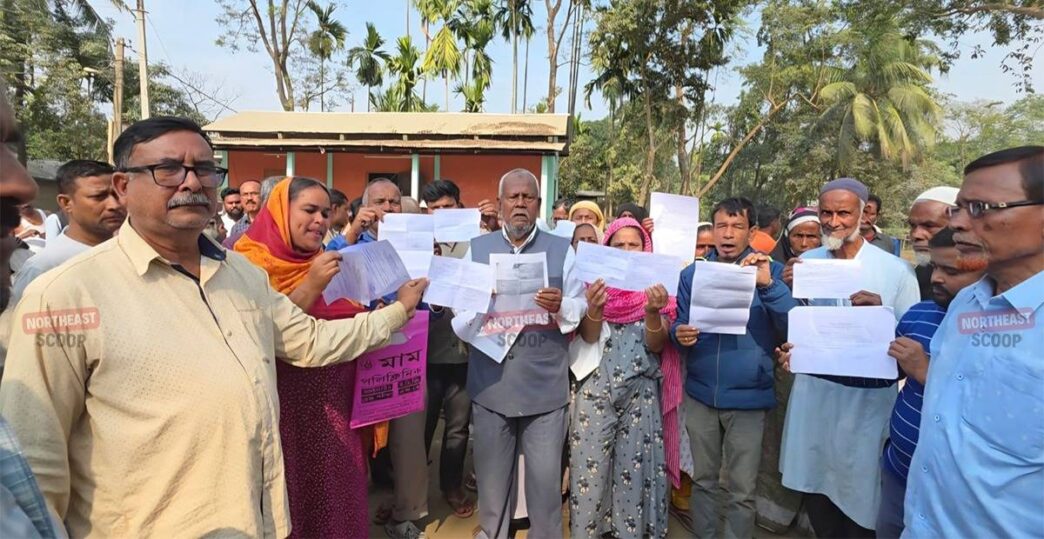
The ongoing Special Revision (SR) of electoral rolls in Assam has triggered anger and fear across several indigenous Muslim villages, where residents say they are being served verification notices despite being officially recognised by the state as indigenous communities raising sharp questions over targeting, identity, and voter rights.
https://youtu.be/RFEsVB3nJDY?si=9xMjXcztskoWC0EZ
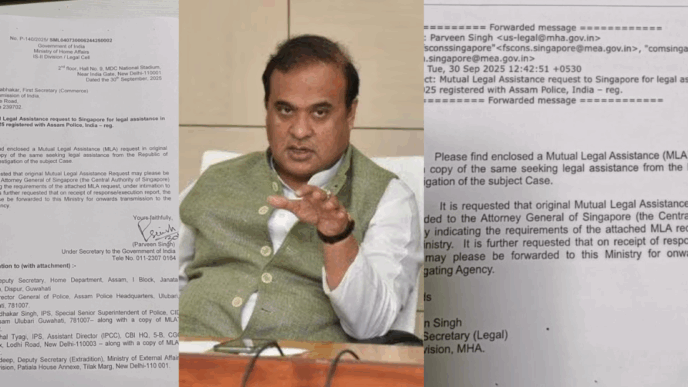
The controversy comes amid public remarks by Chief Minister Himanta Biswa Sarma that the current SR exercise is aimed at “Miya” voters (Bengali-speaking Muslims). The Chief Minister said, “We are giving them trouble,” and linked SR notices, evictions, and border checks to efforts to prevent the increase of “Miya” voters, describing it as resistance against a demographic threat to indigenous Assamese people. He also said before the media, “What vote chori meant to us, yes we are trying to steal some Miya votes. Ideally they should not be allowed to vote in Assam, they should be able to vote in Bangladesh.”
On the ground, however, multiple residents belonging to Goria, Moriya, Julaha and Deshi Muslim communities groups officially recognised by the Assam government as indigenous Assamese Muslims report receiving SR notices citing grounds such as “shifting” and status discrepancies, even when families say they have lived in the same villages for generations.
In Mori Muslim gaon of Morigaon district, where notices were served on the 21st and 22nd January 2026, village president Rehan Ali said the verification exercise created panic. Men and women stood in long queues and several people were injured in the rush. Questioning the basis of the notices, he asked, “Are we Miya? If not, why have we received SR notice?” He said the notice mentions the ground as shifting, “whereas we are here only,” and villagers are demanding to know the name of the complainant.
The objections are not limited to opposition supporters. Mohibur Rahman, a BJP worker whose elder brother was a ward member of the village, said, “If CM is saying only Miyas are getting notices, are we Miyas? Why have we got notice? Stop harassing Gariya Muslims who are indigenous.”
Several recipients describe the notices as humiliating and factually wrong. Aman Ali said:
“My birth is in the year 1954, I am indigenous and a resident for years, I got retired in the year 2014, and I received notice as a dead person.”
Businessman Faruk Hussain said his family’s documented roots go back decades. His father studied at Cotton College in 1935 and later served as a Sales Tax Superintendent.
He said:
“I want to know the name of the complainer. As I requested Deputy Commissioner Anamika Tiwari, she said there is pressure from higher authorities. I told DC who will be held responsible if I commit suicide, as it is a matter of self-respect and dignity.”
Mohammed Amiruddin Ali Ahmed, a BJP booth President, protested during verification, saying, “I am BJP worker and I am indigenous. Do we belong to Gariya community who don’t have self-respect?”
Ahmed Ali of Jaluguti village, Morigaon, said the impact goes beyond paperwork,“In the name of Miyas we are victimised now. We are sad and it’s a matter of self-respect now as CM Himanta Biswa Sarma is forcing us to become second-class citizens. There was a cabinet decision after Himanta became CM that government will do survey for which 100 cr was budgeted and give recognition to Gariya, Moriya, Deshi, Julaha and Syeds as indigenous communities, but nothing had happened as on date.”
Samujjal Bhattacharya, adviser of the All Assam Students’ Union, said,“We have already submitted a memorandum to the CO and our stand is very clear. SR is not new to Assam — both SR and SIR have happened earlier. There is nothing new in this. Deletion of Bangladeshi names from the voter list has been a long-standing demand of AASU since the Assam Movement. For a correct voter list, NRC implementation is the priority. Till then, we extend our support to SR. But in the name of SR, indigenous Muslims and Christians are also receiving SR notices, we do not support this and this is not right.
The tension is politically significant because the Assam Cabinet had approved a socio-economic survey of indigenous Muslim communities in December 2023, and had officially recognised Goria, Moria, Jolah, Deshi and Syed as indigenous Assamese Muslim groups a move meant to distinguish them from Bengali-speaking Muslims of Bangladesh origin, often referred to in political discourse as “Miya.”