
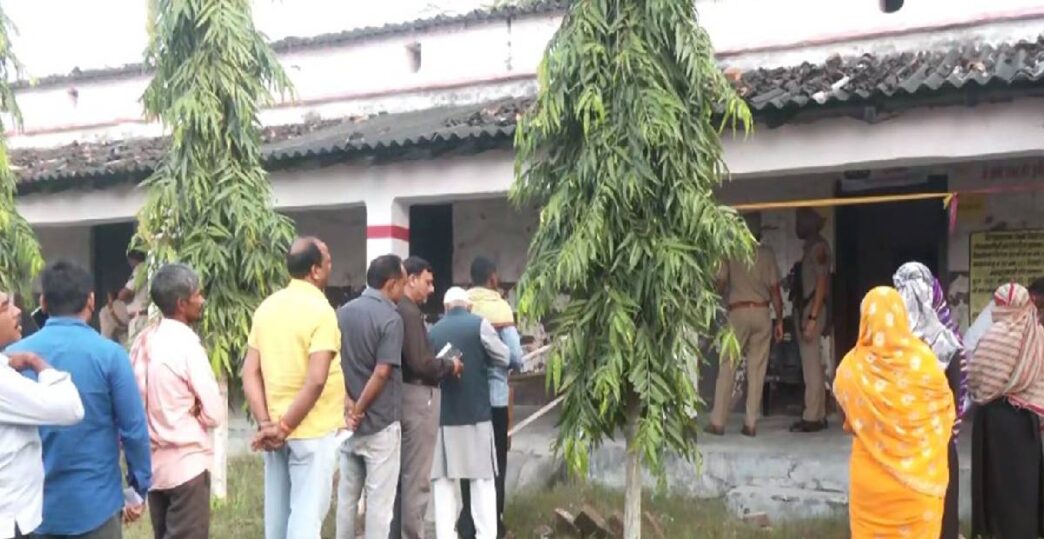
Bihar went to the polls today in the first phase of the 2025 Assembly elections, marking the beginning of a crucial political contest that will decide the state’s direction for the next five years. Voting began early in the morning across 121 constituencies spread over 18 districts, most of them located south of the Ganga River. The polling day saw a mix of anticipation, tight security, and a sense of déjà vu as familiar faces, including the sons of Lalu Prasad Yadav, key ministers from the Nitish Kumar government, and well-known local strongmen, entered the electoral battlefield once again.
In 2020, this region had largely favoured the Mahagathbandhan, led by the Rashtriya Janata Dal (RJD), which secured 63 seats against the NDA’s 55. This time, the stakes are higher, and the contest appears more complex with the entry of poll strategist-turned-politician Prashant Kishor and his Jan Suraaj Party, which many believe could play a decisive “X factor” role in several constituencies.
Among the most closely watched seats is Raghopur, where RJD leader Tejashwi Yadav is seeking a third consecutive win. His main rival, Satish Kumar, now contesting on a JD(U) ticket, had famously defeated Tejashwi’s mother, Rabri Devi, in 2010. Just a few kilometres away in Mahua, Tejashwi’s elder brother Tej Pratap Yadav is contesting to reclaim the seat from RJD’s sitting MLA Mukesh Raushan, making it a contest laden with personal and political overtones. 
The poll map is also dotted with new faces and unconventional candidates. Folk singer Maithili Thakur, contesting from Alinagar on a BJP ticket, has drawn attention as the youngest BJP candidate in this phase. Her popularity among young voters and her connection with Mithila culture could work in her favour in this largely upper-caste constituency, traditionally an RJD stronghold.
Bhojpuri film stars have also entered the scene. Popular actor Khesari Lal Yadav is contesting from Chhapra on an RJD ticket, while singer-actor Ritesh Pandey is representing the Jan Suraaj Party from Kargahar, adding a touch of glamour to the otherwise gritty Bihar politics.
The first phase also holds significance for the ruling NDA as several ministers, including Deputy Chief Ministers Samrat Choudhary and Vijay Kumar Sinha, are contesting. While Choudhary, a key OBC leader, is trying his luck from Tarapur after nearly a decade, Sinha is hoping for a fourth straight victory from Lakhisarai. Health Minister Mangal Pandey, a senior BJP leader and first-time Assembly contestant, is in the fray from Siwan, where he faces RJD’s Awadh Chaudhary, a former Assembly Speaker.
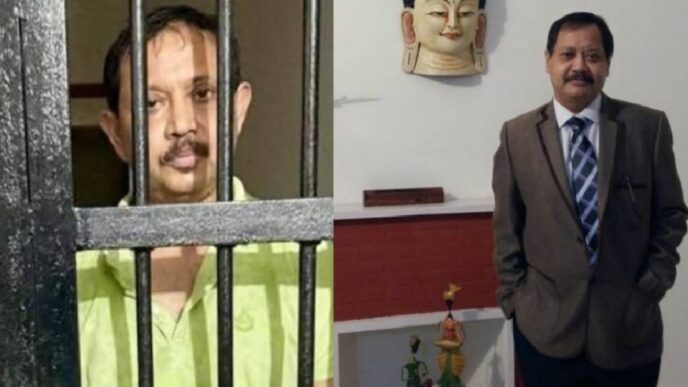
No Bihar election is ever complete without the presence of the so-called bahubalis — strongmen with a long history of muscle power and influence. This time too, their shadow looms large over several constituencies. In Raghunathpur, Osama Shahab, son of the late RJD strongman Mohammad Shahabuddin, is contesting, while in Mokama, jailed JD(U) leader Anant Singh is locked in a prestige battle against the wife of Suraj Bhan, another heavyweight associated with the RJD camp. The contest in Mokama intensified after the recent killing of a Jan Suraaj worker, turning it into one of the most tense electoral flashpoints of this phase.
With women emerging as a crucial voting bloc in recent elections, both alliances have made generous promises. The NDA has proposed a ₹10,000 direct cash transfer scheme to women beneficiaries, while the Mahagathbandhan has countered with Tejashwi Yadav’s “Mai Bahin Maan Yojana”, which promises ₹30,000 in annual assistance. Analysts believe that the side which manages to secure the confidence of women voters could gain a decisive advantage in many constituencies.
The elections are also being held amid controversy surrounding the Special Intensive Revision (SIR) of electoral rolls, which reportedly led to the deletion of nearly 60 lakh names. Opposition parties have accused the Election Commission of selectively removing names belonging to marginalised and minority communities. The commission, however, has maintained that the process was carried out as per rules to eliminate duplicate and invalid entries.
As the day progressed, reports from across the 18 districts indicated moderate to brisk voter turnout. Long queues were seen in both rural and urban areas, including Patna, Gaya, Nalanda, and Begusarai. While security arrangements remained tight, polling was largely peaceful in most places. Election observers noted that the mood of the voters appeared divided, with local issues like unemployment, inflation, and law and order dominating discussions.
The RJD-Congress alliance has focused its campaign on rising joblessness and accused Chief Minister Nitish Kumar of becoming subservient to the BJP. The NDA, on the other hand, has revived its old “jungle raj” slogan to remind voters of the RJD’s governance record. Both sides held a series of rallies and door-to-door campaigns in the days leading up to polling, each claiming that the “wave” was in its favour.