
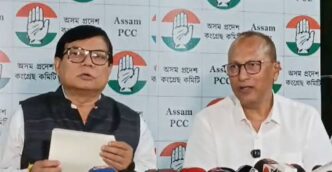
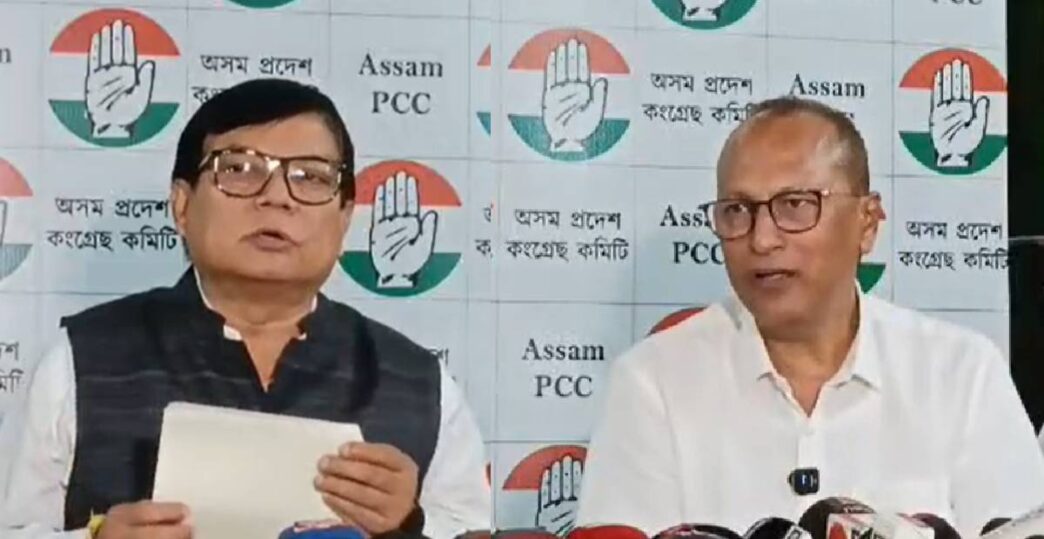
The Assam Congress on Tuesday launched a fierce attack on the ruling BJP for failing to fulfill promises to grant Scheduled Tribe (ST) status to six long-standing communities in the state. The party held a press conference at its state headquarters in Guwahati.
Debabrata Saikia, the Leader of the Opposition in the Assam Assembly, opened the press meet by highlighting the repeated assurances made by the BJP since 2014. Saikia said, “When the BJP came to power in Delhi in 2014, they promised to grant ST status to the Tai Ahom, Moran, Matak, Koch Rajbongshi, Chutia and Tea Tribes within six months. Eleven years later, nothing has happened. Zero progress. He also mentioned Tribal Affairs Minister Jual Oram, who had assured Assam leaders that the files were “ready on his table,” adding, “Oram ji promised it would happen soon. But here we are, eleven years later, still waiting.”
Saikia traced the long history of broken promises through the years – 2014, 2016, 2019, 2021, 2024, and now slipping into 2025. “Every election cycle, the BJP gives the same speech: ‘We will form a group of ministers, take it to the Centre, and get it done.’ We have heard it countless times. The indigenous communities have marched, protested, blocked roads and even sat in for days from the hills of Upper Assam to the plains of Lower Brahmaputra. And what do they get? More waiting.” 
The opposition leader did not hold back while targeting Chief Minister Himanta Biswa Sarma. “This mess is on one pair of shoulders: Himanta Biswa Sarma. He’s called the ‘Chanakya’ of Assam politics, but here it’s all division. Now, with protests rising everywhere, he points fingers at Congress, saying we are stirring trouble. The reality is different. He makes calls, whispers in leaders’ ears before the polls and smears our name to cover his own failures,” Saikia said.
Saikia said that these communities are not asking for handouts. “ST status means a fair chance: reserved seats in schools and jobs, protection of land from outsiders and a say in decisions affecting their villages. Without it, they remain stuck; too indigenous for general quotas, but not tribal enough for full safeguards.”
Joining Saikia was Pradyut Bordoloi, Congress MP who recalled the historical context of tribal protections. “The Constitution recognizes the Northeast, thanks to leaders like Gopinath Bordoloi, Assam’s first post-independence Chief Minister. He fought for the Sixth Schedule, giving tribal councils control over land, forests, and customs. This was the foundation of protections for our indigenous communities,” Bordoloi said.
Bordoloi said, “During Hiteswar Saikia’s tenure in the 1990s, we implemented land reforms, cultural protections, and established the Tribal Research Institute to support these communities without affecting others,” Bordoloi said. He said that Congress’s stance today remains clear: “To tribes who already have ST status, like the Bodos, Misings, and Karbis, we say your rights are safe. But the six communities without status deserve justice, and we will fight for them.”
The press meet came on the day the state government’s Group of Ministers, assigned to examine the ST demand, was scheduled to submit its report to the cabinet. Chief Minister Himanta Biswa Sarma, speaking recently downplayed unrest, saying, “These protests will not affect our plans for 2026. The report is designed to maintain balance, with amendments if necessary, to avoid upsetting existing tribes.”
However, protests are growing across Assam. In Nagaon, more than 200 people rallied, calling for ST status and even demanding Assam be declared a full tribal state. In Bihpuria, Mising communities blocked the Subansiri riverbank, fearing quotas would shrink. In Jorhat, the All Tai Ahom Students’ Union staged a torch rally warning of a “2026 backlash” if the government delays action. Similarly, in Lakhimpur, Tai Ahom youth protested, linking their ST demand to wider calls for justice in the state.
These protests are not isolated. They reflect frustration that has been building since the BJP swept Assam in 2014, winning seven MPs on promises of supporting the Northeast. At the time, Prime Minister Narendra Modi acknowledged tribal aspirations in his rallies, raising hopes that have yet to materialize. Opposition groups, including the Bodoland Janajati Suraksha Manch, argue that granting ST status to “advanced” communities like the Tai Ahom, who number over 2 million and have significant business influence, could overwhelm the system and leave smaller tribes disadvantaged.