
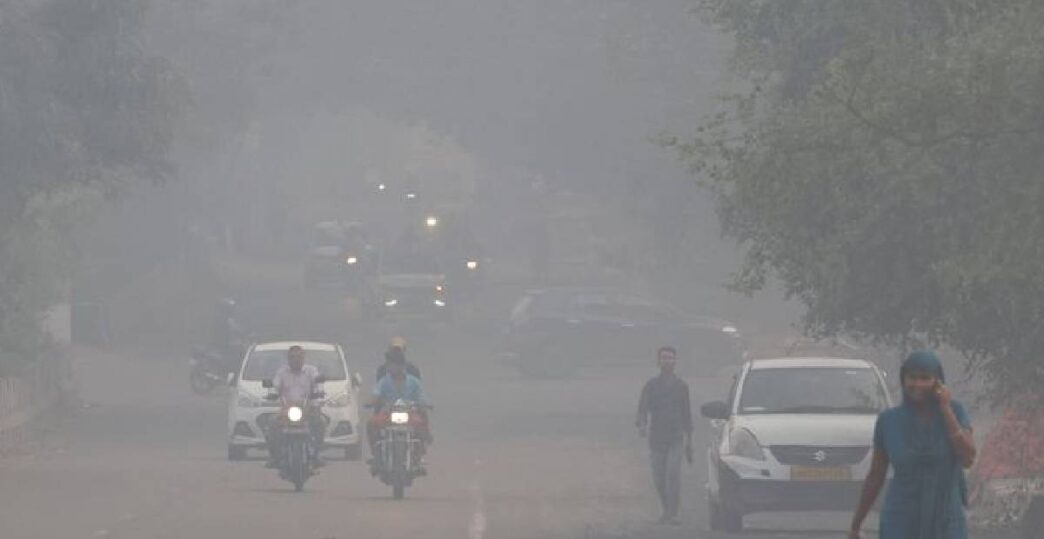
The morning after Diwali brought no joy to Delhi’s residents as the city woke up to thick, choking smog blanketing the skyline. The air quality dipped sharply overnight, reaching the ‘severe’ category with an average Air Quality Index (AQI) reading of 451, far beyond safe limits. Experts have described it as one of the worst post-Diwali mornings in recent years.
The haze that hung over the capital was a grim reminder of the city’s recurring air pollution crisis. Despite repeated appeals from authorities to avoid firecrackers, many parts of the city saw widespread bursting of crackers late into the night. The combined effect of the firecrackers, low wind speed, and cool weather conditions trapped pollutants close to the surface, creating a dense blanket of smog that refused to lift even after sunrise.
According to the Central Pollution Control Board (CPCB), areas like Anand Vihar, Jahangirpuri, and RK Puram recorded some of the worst readings, with AQI levels hovering between 460 and 490. The air quality was classified as “hazardous,” making it unsafe for outdoor activities. Doctors have warned that prolonged exposure could lead to breathing difficulties, coughing, eye irritation, and other health problems, especially among children and the elderly.