

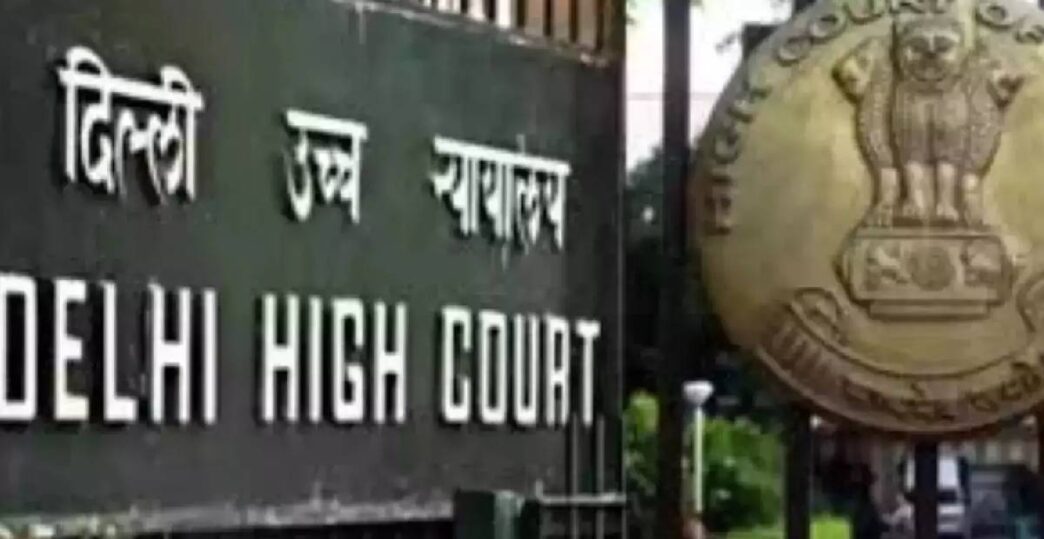
The Delhi High Court has disposed of a petition filed by the Assam Rifles Ex-Servicemen Association, clearly stating that personnel of the Central Armed Police Forces (CAPFs) cannot claim pay, allowances or pension equal to that of the Indian Army. The order was passed in W.P.(C) 10493/2017, and the Court made it clear that questions of pay fixation and service benefits fall only within the powers of the Central Government.
The Court explained that there is a clear and legally valid difference between the duties of the Indian Army and the duties of CAPFs such as the Assam Rifles. According to the Court, this difference in the nature of work is an important factor when determining pay and allowances. The Bench pointed out that Army personnel usually retire between the ages of 42 and 54 depending on their rank. In contrast, Assam Rifles personnel continue to serve up to the age of 60. Because of this longer service period, the Court said, there is a reasonable basis for differences in pension and other monetary benefits.
The Bench also said that no evidence was placed before it to show that the recommendations of the 4th Central Pay Commission had caused any kind of discrimination against Assam Rifles personnel. With this, the Court rejected any suggestion that earlier pay commission decisions had created unfair treatment. 
The Court also addressed a wave of misleading posts circulating on social media. Some users had falsely claimed that the Delhi High Court had directed the Central Government to remove pay disparity between the Assam Rifles and the Indian Army within three months. The Court made no such order. Instead, it limited its decision to a much narrower issue.
The only direction given by the Court was that the Petitioner Association is allowed to submit a detailed representation to the Central Government about any anomalies that may have occurred after the 3rd Central Pay Commission. The Court instructed the competent authority to examine that representation and take a decision within three months. The Court stressed that this direction cannot be read as an order to implement pay parity.
During the hearing, the Court also noted the detailed material presented by the Respondents, including the Law Branch of the Directorate General Assam Rifles. These submissions helped the Bench understand the differences in service conditions, tenure of service and the operational responsibilities of the Indian Army and the Assam Rifles. The documents showed that the Union of India had acted within the law and that the two forces cannot be considered the same for the purpose of pay and pension.
After reviewing all submissions, the Court disposed of the writ petition and the related applications. The ruling has made it clear that the issue of pay parity remains a policy matter for the Central Government, and that the Court has not given any directive to equalise the pay structure of the Assam Rifles with that of the Indian Army.