


A large and tense protest broke out in Bodoland on Saturday as thousands of tribal students came together to oppose the Assam government’s proposal to grant Scheduled Tribe (ST) status to six more communities in the state. The agitation, which began as a peaceful march, soon turned into a violent and emotional confrontation, reflecting deep worry among Bodo groups about what they see as a threat to their political and social rights.
The protest started at Bodoland University, where student groups gathered from early morning. They marched towards the Bodoland Territorial Council (BTC) Secretariat in Kokrajhar. What began as a disciplined rally slowly changed as more people joined. The crowd grew louder, and the mood became tense. Students accused the government of trying to dilute the rights of the existing ST communities and of ignoring repeated appeals from tribal bodies.
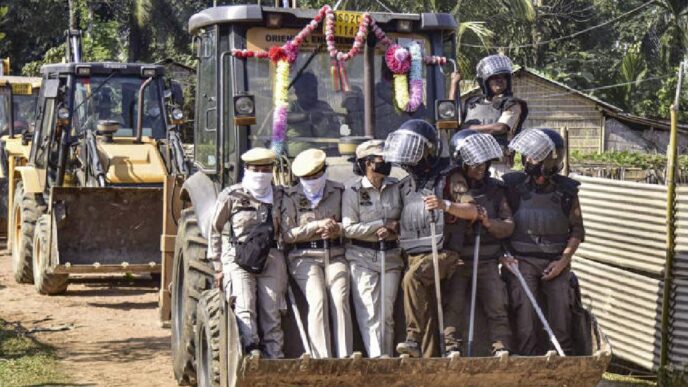
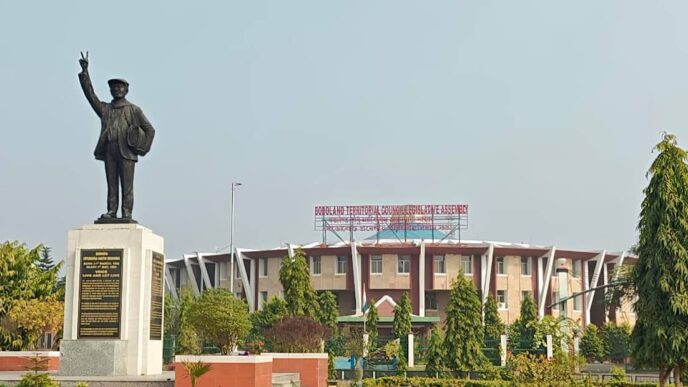
The situation turned serious when protesters reached the BTC Secretariat. Many of them pushed through the main gate, broke parts of it, and entered the premises. Some sections of the BTC Assembly House were vandalised. Security forces had to step in to bring the situation under control, though the crowd continued to swell and raise slogans. Officials said the situation remained sensitive throughout the afternoon. 
Student leaders spoke strongly against the Centre and the state government. They said granting ST status to the Tai Ahom, Chutia, Moran, Matak, Koch-Rajbongshi and Tea Tribe communities would reduce the share of existing tribal groups in reservation, education and government jobs. Many also said that political representation for Bodos could weaken if more communities were included in the same category.
Some students said that these communities had earlier looked down on Bodos and that the sudden demand for equal status felt unfair. One student leader said, “They used to say they come from the Ahom kingdom and treated us as inferior. Now they want the same rights as us. How can we accept that?”
Leaders warned that the protest on Saturday was only a beginning. They said that if the government did not respond soon, larger and more aggressive movements would follow. “Today around 2,000 of us marched. This is only a trailer,” one of them said.
A few student groups also linked the issue to the long-standing Bodoland statehood demand. They argued that if the six communities could push their claim for ST status through a few rallies, the call for a separate Bodoland would also gain new force. They said the movement would intensify if their concerns remained unanswered.