
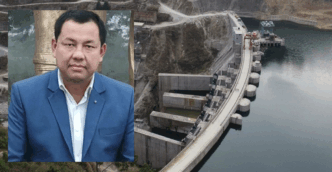
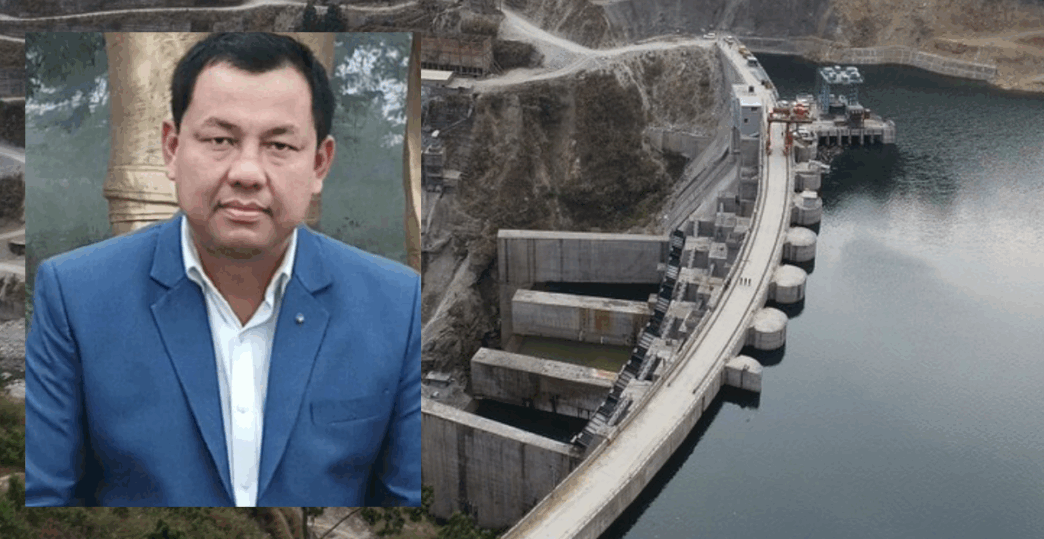
The decision by the National Hydroelectric Power Corporation (NHPC) to halt construction of the Upper Subansiri hydroelectric project on safety grounds has once again thrown a harsh spotlight on the much larger and more controversial Lower Subansiri mega dam at Gerukamukh. Student body Asom Jatiyatabadi Yuva-Chatra Parishad (AJYCP) has now renewed its long-standing demand to scrap the 2,000 MW Lower Subansiri project, calling it a grave threat to the lives, land and ecology of Assam.
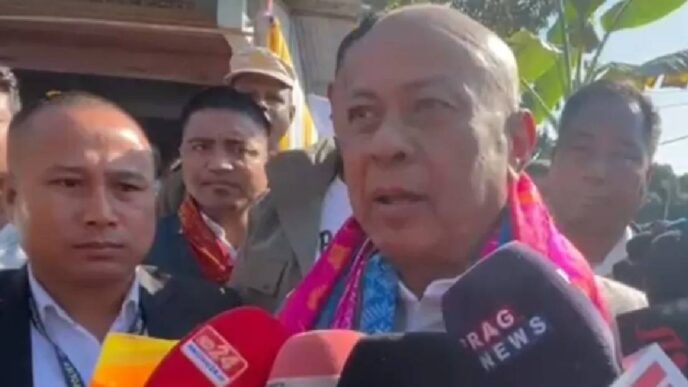
Speaking exclusively to Northeast Scoop, AJYCP central committee president Palash Changmai said the suspension of the Upper Subansiri project exposes the deep contradictions and double standards of both the Centre and the Assam government.
“If the Upper Subansiri dam has been declared unsafe, how can the even larger Lower Subansiri mega dam be considered safe?” Changmai asked. “This is not a technical debate anymore. It is about political stubbornness, suppression of truth and a dangerous disregard for human life.” 
NHPC recently halted work on the Upper Subansiri project following objections from local residents in Arunachal Pradesh and reports by experts flagging serious safety concerns. The project, located upstream of the Lower Subansiri dam, was facing resistance over employee security, geological instability and structural risks.
According to the AJYCP, the halt has indirectly validated what anti-dam groups, environmentalists and local communities have been saying for more than two decades, that large dams on the Subansiri river are inherently risky and poorly suited to the region’s fragile Himalayan terrain.
“What experts said years ago has now come true,” Changmai said. “But instead of learning from this, the government continues to push the Lower Subansiri project, which is much larger and far more dangerous.”
Opposition to the Lower Subansiri mega dam is not new. From the very beginning of construction at Gerukamukh, mass movements erupted across Assam. Student organisations, farmer groups, civil society bodies and environmental activists repeatedly demanded that the project be scrapped.
The AJYCP pointed out that the project was initiated during the Congress regime, and at that time, the Bharatiya Janata Party (BJP), then in opposition, had strongly opposed the dam. BJP leaders had questioned its safety, environmental impact and long-term consequences.
“Once the BJP came to power, everything changed,” Changmai alleged. “The same leaders who opposed the dam earlier completely reversed their stand. Not only did they support the project, they crushed anti-dam movements using police force, intimidation and legal pressure.”
According to the student body, peaceful protests were met with arrests, cases and deployment of security forces, creating an atmosphere of fear around the project site.
One of the most serious concerns raised by the AJYCP relates to the location of the Lower Subansiri dam. The project is situated in a highly seismic zone, in the fragile hills of Arunachal Pradesh, close to major fault lines.
Geologists and environmental experts have repeatedly warned that a strong earthquake could cause catastrophic damage to the dam structure. Any failure, they say, would release massive volumes of water downstream, putting lakhs of lives at risk across Assam’s northern bank.
“This is not speculation,” Changmai said. “This region has a long history of earthquakes. Building a mega dam here is like sitting on a ticking time bomb.”
The AJYCP further alleged that several expert committees, including those appointed by the government itself, had raised serious red flags about the safety of the Lower Subansiri project. These committees reportedly included environmentalists, geologists and technical specialists.
“Those reports clearly stated that the dam is unsafe,” Changmai claimed. “But instead of making them public, the government deliberately hid them. Why? Because they knew the truth would lead to massive public outrage.”
The organisation said the refusal to disclose these reports amounts to a betrayal of public trust and violates the basic principle of transparency.
Despite claims of completion, the Lower Subansiri project has not become fully operational even years after construction ended. Designed to generate 2,000 MW of electricity, the dam is currently producing only around 600 MW, according to the AJYCP.
“This itself is an admission of failure,” Changmai said. “The government has been forced to accept that the project is defective.”
The student body alleged that faulty construction, poor-quality materials and violation of safety norms have led to repeated technical problems.
Several incidents at the project site have added to public anxiety. According to the AJYCP, guard walls have collapsed, tunnels have been blocked and structural damage has occurred even during normal rainfall, not extreme weather events.
“If this is the condition before full operation, imagine what will happen once the dam starts releasing water at full capacity,” Changmai warned.
The organisation accused NHPC of compromising on construction quality and cutting corners to meet deadlines, putting safety at serious risk.
One of the most striking revelations highlighted by the AJYCP is that Prime Minister Narendra Modi was earlier invited to inaugurate the Lower Subansiri project. However, the Prime Minister’s Office later cancelled the programme.
According to the student body, an Intelligence Bureau (IB) report flagged serious safety concerns about the dam, leading to the cancellation.
“This proves that even at the highest level, there are doubts about the safety of the project,” Changmai said. “Yet the government continues to push it on the people of Assam.”
The AJYCP pointed to recent instances where smaller hydropower projects caused damage due to sudden and unregulated release of water, especially during the monsoon.
“This year itself, we have seen how smaller dams triggered flooding and destruction downstream,” Changmai said. “If such damage can be caused by small projects, the impact of a fully operational Lower Subansiri mega dam will be unimaginable.”
According to the organisation, crores of people living along the northern bank of Assam would be exposed to unprecedented risk.
The AJYCP questioned why NHPC and the government acted swiftly to halt the Upper Subansiri project, citing safety of employees and protests by a limited number of people in Arunachal Pradesh, while ignoring decades of opposition and safety concerns related to the Lower Subansiri dam.
“If a small number of protesters can stop Upper Subansiri, why can’t the voices of crores of people downstream be heard?” Changmai asked. “Are the lives of people in Assam less important?”
The Asom Jatiyatabadi Yuva-Chatra Parishad has categorically demanded that the Lower Subansiri mega dam be scrapped immediately. The organisation said there is no justification for continuing with a project that is defective, unsafe and opposed by a large section of the population.
“This is not development,” Changmai said. “This is reckless governance.”
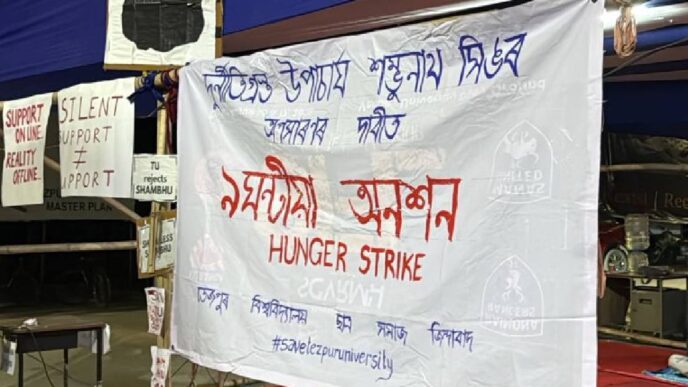
The AJYCP warned that it would intensify its agitation if the government continues to ignore public concerns and expert warnings.