
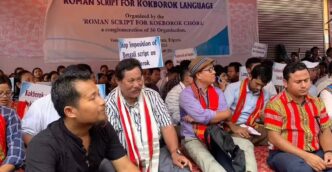
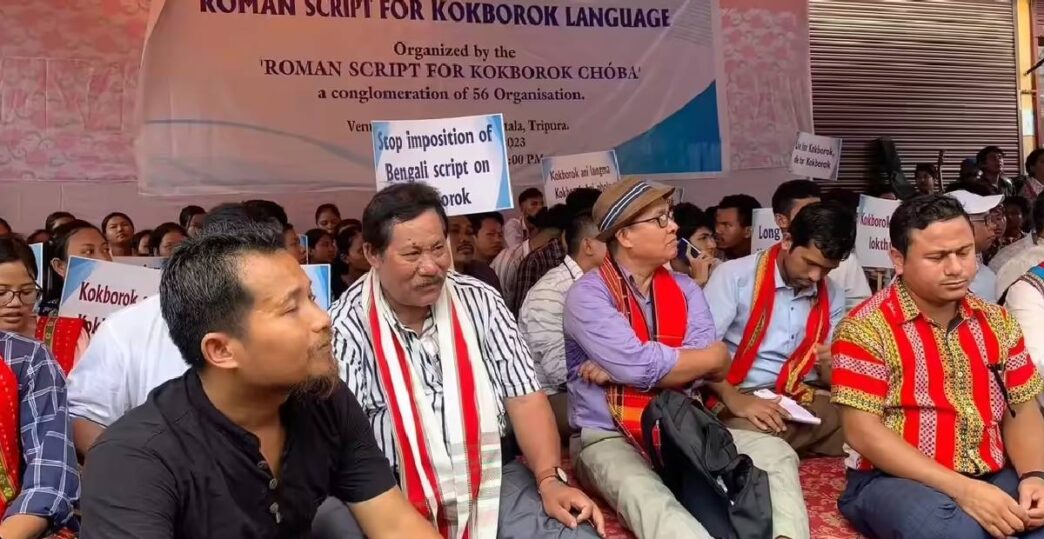
The long-running debate over the script to be used for Kokborok, also known as Kau Bru, has once again come into sharp focus in Tripura, following a renewed push by Tipra leaders and elected tribal representatives. This time, the demand has been made formally and with a clear warning that continued delay could have lasting effects on future generations.
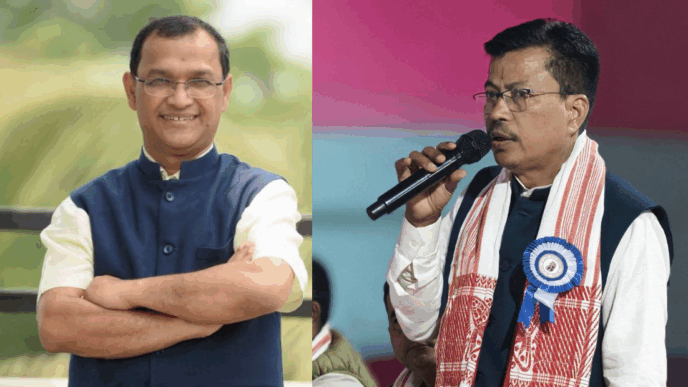
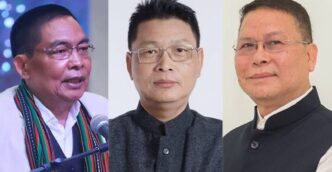
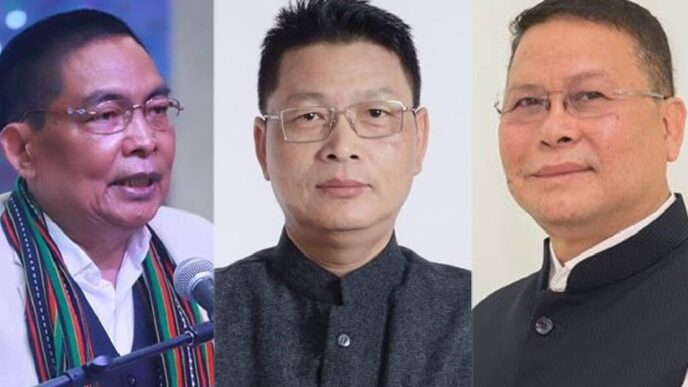
A memorandum submitted to Chief Minister Manik Saha calls for the immediate recognition of the Roman script as the official script for Kokborok. The memorandum has been signed by elected members of the Tripura Legislative Assembly and the Tripura Tribal Areas Autonomous District Council, including ministers and MLAs. The initiative has been taken under the leadership of Pradyot Bikram Manikya DebBarma, who is also the Chairman of the Administrative Reform Committee of the TTAADC.
The signatories argue that the absence of a clear and final decision on the script has slowed the growth of Kokborok as a language of education, administration, and daily use. They say that repeated changes and continued uncertainty have created confusion among students, teachers, and officials, particularly in tribal areas where Kokborok is widely spoken. 
According to the memorandum, the Roman script has long enjoyed broad acceptance among Kokborok speakers. The document states that the continued preference for other scripts has limited the language’s reach and has made learning more difficult for children whose exposure to Roman letters begins early through English education. The representatives argue that adopting the Roman script would make learning easier and help Kokborok adapt better to modern educational and administrative needs.
The memorandum also makes a constitutional argument. It states that recognising the Roman script is fully allowed under the Constitution of India. It refers to Article 14, which guarantees equality before the law, Article 29(1), which protects the right of any section of citizens to conserve its language and culture, and Article 350A, which directs states to provide facilities for instruction in the mother tongue at the primary stage. The document further notes that provisions of the Sixth Schedule support the rights of tribal communities to preserve and promote their language and identity.
The elected representatives have made several specific demands. They have called for the Roman script to be officially recognised as the state script for Kokborok. They have also asked that question papers for Kokborok subjects in CBSE, ICSE, and TBSE examinations be printed in the Roman script. In addition, they have demanded that all Kokborok textbooks be published in the Roman script and that candidates be allowed to write Kokborok in Roman script in government recruitment examinations, including those conducted by the Tripura Public Service Commission.
The memorandum recalls that Kokborok was recognised as a state language in 1979 through an amendment to the Tripura Official Language Act, 1964. It also points out that the demand for the Roman script is not new. According to the document, calls for the Roman script date back to 1967. Over the decades, several language commissions have studied the issue and recorded public opinion.
The memorandum refers to the findings of the Shyama Charan Tripura Commission, the Kumud Kunda Chowdhury Commission, and the Pabitra Sarkar Commission. These commissions, it says, found widespread support for the Roman script among Kokborok speakers. Despite these findings, the issue has remained unresolved, leading to repeated protests, discussions, and political debates.
Reacting to the submission of the memorandum, Pradyot Bikram Manikya DebBarma said that Tipra’s elected representatives, including himself, have made their position clear to the authorities. He said their support for Kokborok in the Roman script is “unambiguous” and has now been formally communicated to the state government.
He also stressed that other elected Tiprasa representatives should clearly state their stand on the issue. According to him, silence or unclear positions could prove costly. He warned that the consequences would not be limited to politics or elections but would affect children and future generations. He said that the issue goes beyond party lines and personal differences and concerns the long-term cultural and educational interests of the Tiprasa people.