
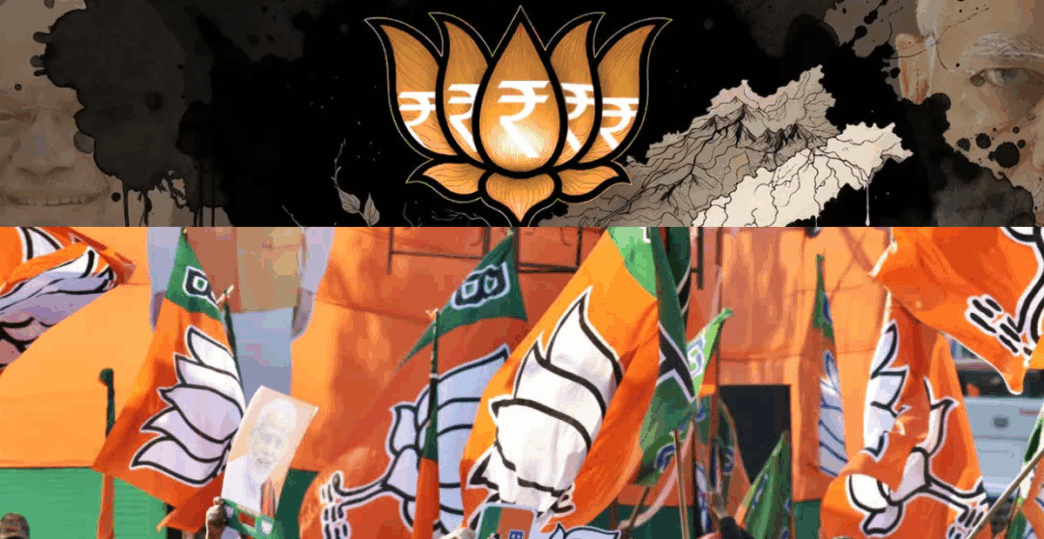
Political parties have raked in a staggering Rs 3,112 crore through the opaque electoral bonds scheme as of December 22, 2025. This isn’t democracy; it’s a high-stakes auction where big businesses buy influence and the Bharatiya Janata Party (BJP) is the undisputed kingpin.
The data as shown by the Election Commission paints a picture of a party drowning in corporate cash while pretending to champion the common man. Yet, this is just the tip of the iceberg; these figures only capture the “official” donations.
The flow of secret money, passed quietly through closed-door deals and unclear channels, remains hidden from public view, allowing the BJP to function like an organised group protected by power. There is no doubt that big corporate companies are calling the shots, using their huge financial strength to influence political parties. 
The BJP, under Prime Minister Narendra Modi’s iron-fisted regime, has mastered this art of legalized bribery. According to the records for the 2024–25 financial year, the BJP alone pocketed a jaw-dropping Rs 2,668.46 crore over 85% of the total haul! At a time when people across the country are struggling with rising prices, lack of jobs, and poor infrastructure, Modi’s party continues to receive huge amounts of money from wealthy business leaders who expect benefits in return.
In contrast, the Congress party scraped by with a meager Rs 208.71 crore, and other parties combined managed a pitiful Rs 21.63 crore. This isn’t competition; it’s a rigged game where the BJP’s dominance is bought and paid for by corporate overlords.Who are these puppet masters? The list reads like a who’s who of India’s billionaire elite, all cozying up to the BJP in exchange for policy favors, tax breaks and lucrative contracts.
Megha Engineering & Infrastructure Ltd, a Hyderabad-based giant infamous for its ties to controversial projects, tops the donor charts with massive infusions that scream quid pro quo. Then there’s the Vedanta Group, led by mining magnate Anil Agarwal, whose environmental violations have been swept under the rug amid generous “contributions.”
Telecom giant Bharti Airtel, pharmaceutical heavyweights like Aurobindo Pharma and Torrent Pharmaceuticals; these aren’t philanthropists; they’re investors betting on a BJP government to shield them from regulations and open doors to monopolies. How many public resources have been plundered to repay these debts? How many farmers’ lands seized, forests razed, or workers exploited to keep these donors happy?
The electoral bonds system, rammed through by the BJP in 2017 amid widespread criticism, was designed to be a black box of anonymity. It allows donors to hide behind secrecy, fueling suspicions of money laundering and foreign interference. The Election Commission, under pressure from the Supreme Court’s historic February 2024 ruling that declared the scheme unconstitutional, has uploaded details of bonds related to nine elections on its website.
But what good is partial transparency when the real scandals lurk in the undisclosed shadows? Experts estimate that unofficial donations cash under the table, offshore accounts, or favors in kind could dwarf these numbers, turning the BJP into a veritable slush fund machine. This is not good governance. It is a system where big corporate leaders influence government decisions from their offices, while ordinary citizens end up paying the price. The BJP’s stand looks contradictory. The party often speaks against corruption and black money, but at the same time it is holding large funds that could have been used to improve hospitals, schools, and roads for the public.
Modi’s “New India” is nothing but a facade for old-school crony capitalism, where the rich get richer and the powerful stay untouchable. Opposition leaders have rightly slammed this as an assault on democracy with Congress spokesperson Jairam Ramesh calling it “the biggest scam in independent India’s history.” Civil society groups demand a full audit, but will the BJP comply?
There is little hope of change, as the party’s dependence on corporate money has grown too strong. It is time for the public to question this system openly. People in India deserve a government that works for citizens, not for the wealthy few. Unless the BJP is made answerable for the massive flow of donations and the lack of transparency around it, democratic values will remain under threat. The concern is that real power is shifting away from elected institutions and into the hands of large corporations that benefit quietly from the system.