
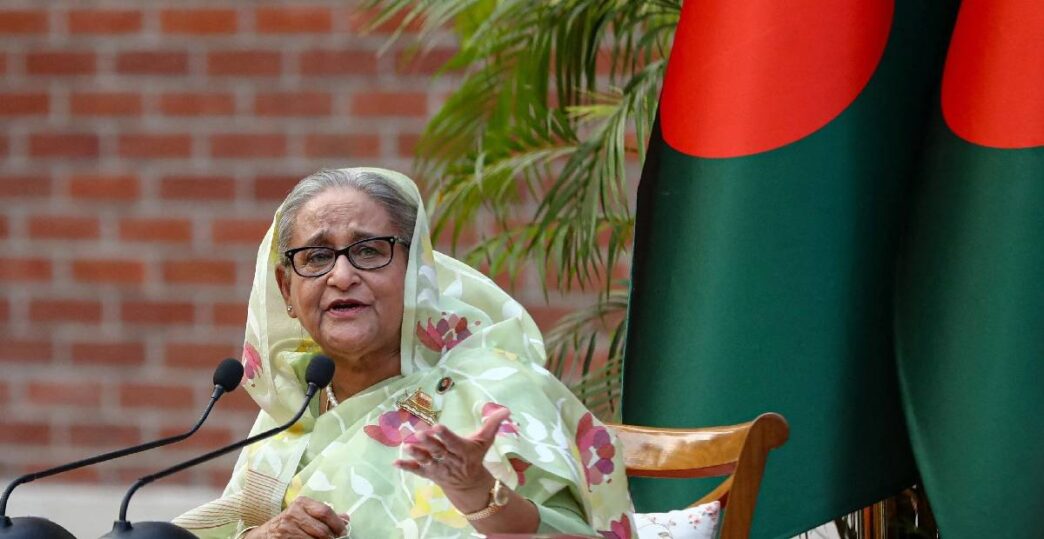
Former Bangladesh Prime Minister Sheikh Hasina has been sentenced to death by Bangladesh’s International Crimes Tribunal for alleged crimes against humanity during last year’s student-led protests that led to the fall of her Awami League government. The court found Hasina guilty on three counts, including incitement, ordering killings, and failing to prevent atrocities.
The three-member tribunal, headed by Justice Md Golam Mortuza Majumder, also issued verdicts against Hasina’s aides, former Home Minister Asaduzzaman Khan Kamal and former police chief Chowdhury Abdullah Al-Mamun. While Kamal faces the death sentence alongside Hasina, Mamun was pardoned after cooperating with the investigation and providing full disclosure of his involvement. Hasina and Kamal were tried in absentia, as both remain in exile in India.
The court noted that during the protests, Hasina disregarded students’ demands, referred to them with derogatory terms, and ordered security agencies to use drones, helicopters, and lethal weapons to target protesters, including female students. Eyewitness testimony and prosecution evidence linked attacks to Awami League-backed groups such as Chhatra League and Yuva League. 
The charges against Hasina, Kamal, and Mamun included murder, attempted murder, torture, and other inhumane acts. A United Nations rights report estimates that up to 1,400 people were killed during the so-called “July Uprising” between July 15 and August 15, 2024, amid the government crackdown.
Hasina, 78, fled Bangladesh on August 4, 2024, as unrest intensified. The interim government led by Muhammad Yunus has formally requested India to extradite her, but there has been no response from the Indian authorities so far. Security remains tight across Bangladesh. Dhaka police have issued shoot-at-sight orders in case of arson or attacks, while army troops, riot police, and Border Guard Bangladesh personnel are deployed near the tribunal.
Ahead of the verdict, the disbanded Awami League called a two-day shutdown, though streets in the capital remained largely empty amid fears of violence. Observers note that the decision is likely to further polarize politics in Bangladesh, as Hasina’s supporters claim the trial is politically motivated, while the interim government emphasizes justice for the victims of last year’s student crackdown.