
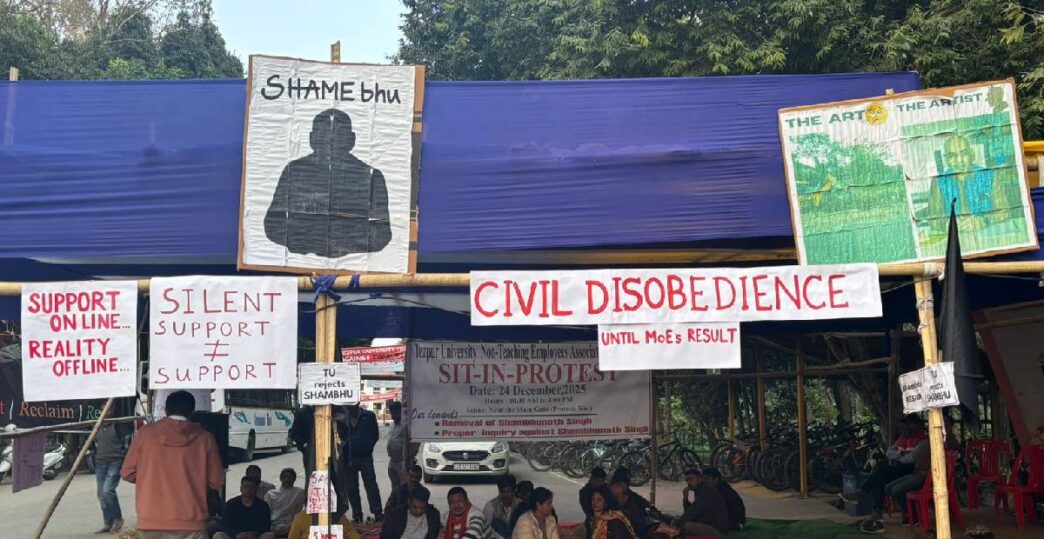
Tezpur University has now seen 100 days of continuous student protest, marking a rare and sustained campus movement in Assam. The agitation, which began on 21 September 2025, has grown from a student-led expression of concern into a wider institutional and civil society response. Even after multiple inquiries, visits, and assurances, students say there has been no concrete or written action from the Ministry of Education so far.
The movement first began during a period of state mourning. Students alleged insensitive administrative responses and derogatory remarks by the Vice-Chancellor. Soon after, a seven-point memorandum was submitted to the authorities. This was followed by large-scale student mobilisation, overnight sit-ins, and the announcement of a magisterial inquiry by the District Administration between 21 and 23 September.
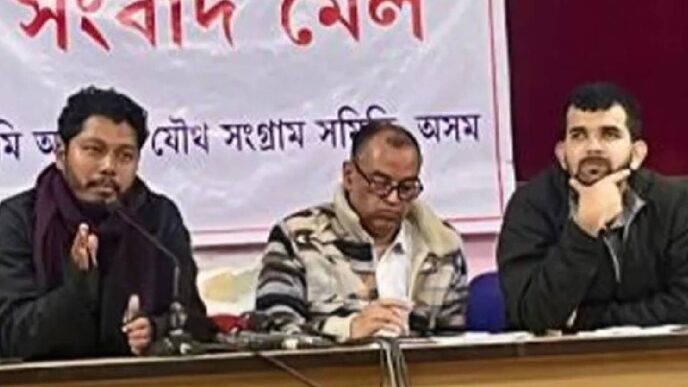
From 24 to 27 September, the protest started taking on an institutional form. The Tezpur University Teachers’ Association and sections of non-teaching staff joined students. A joint memorandum was sent to the authorities, seeking the removal of the Vice-Chancellor as well as wider structural reforms. A press conference was also held during this time, making the issues public beyond the campus. 
In mid-October, the matter reached the Governor’s office. A fact-finding committee appointed by the Governor visited the university from 12 to 16 October. The committee was tasked with looking into complaints related to corruption, recruitment irregularities, hostel mismanagement, and digital security breaches. A three-member team from the Ministry of Education also visited the campus. However, students and staff state that no official report or outcome from these visits has been shared with the campus community so far.
Towards the end of October, tensions deepened. Arbitrary administrative decisions, including an attempted appointment of a new Registrar, were opposed by students and staff. The protest took several symbolic forms, including a black march and cultural demonstrations. Protesters said these actions reflected the growing sense of paralysis and lack of transparency inside the institution.
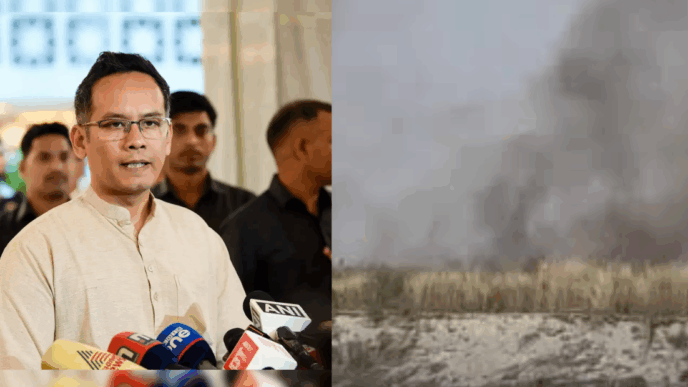
Through October and November, different stakeholder groups including students, teachers, and alumni reached out to elected representatives. Meetings were reportedly held with Members of Parliament and Members of the Legislative Assembly. The issue was also placed before constitutional authorities. Despite verbal assurances and promises of intervention, students say there has still been no firm resolution.
The protest widened further in November. From 9 to 14 November, demonstrations were held against alleged gender discrimination in hostels and financial irregularities in the School of Engineering. These developments led to the resignation of some key officials, signalling the depth of internal disagreement.
On 27 November, frustration among students reached a new point. An indefinite campus shutdown was declared, halting both academic and administrative functioning. Many students said this decision was taken because there had been no meaningful response from the authorities despite weeks of communication attempts.
The agitation continued into December. On 15 December, students held a nine-hour hunger strike to increase pressure on the administration and the Ministry of Education. A few days later, on 19 December, a large citizens’ convention was organised. Academics, legal professionals, student organisations, and representatives from civil society attended the gathering. Speakers strongly criticised what they called prolonged governmental silence and called for immediate accountability.
Today, after 100 days, the movement has turned into a broader call for transparency and democratic functioning in higher education. Students and staff say the crisis at Tezpur University is not just about personalities, but about the way institutions should be governed.