

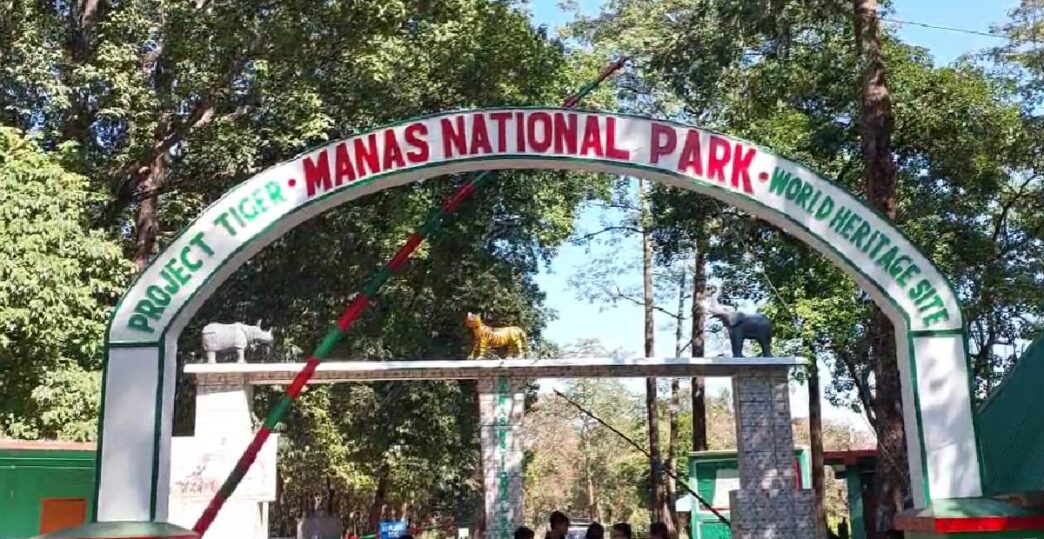
There is good news from Manas National Park, one of Assam’s most beautiful and important wildlife reserves. The number of tigers in the park has been increasing in recent years, bringing new hope for conservationists and wildlife lovers. This positive change has also brought a welcome rise in the number of tourists visiting the park this season.
Manas National Park, which is a UNESCO World Heritage Site, reopened its gates to visitors on September 24 for the 2025–26 tourism season. Since then, the park has been witnessing a steady flow of tourists from both India and abroad. Visitors are flocking to the Bansbari Range and other parts of the park to enjoy its natural beauty, dense forests, and diverse wildlife.
Tourists have been thrilled to spot some of the park’s famous inhabitants — including the Royal Bengal Tiger, clouded leopards, Indian one-horned rhinos, Asian elephants, and different species of deer and birds. Jeep safaris and nature trails are once again full of eager visitors carrying cameras and binoculars, hoping to capture the rare sight of tigers in the wild. 
Local guides and forest officials have noted that the increased tiger sightings this season have made the park even more popular. Many tourists have described their visit as a once-in-a-lifetime experience, praising the lush green landscape and peaceful environment of Manas, which lies along the foothills of the Bhutan Himalayas in Assam’s Baksa district.
Speaking about the encouraging development, Barin Baro, Ranger of the Bansbari Range, said that the tiger population in Manas National Park has grown considerably over the years. He expressed confidence that the number will continue to rise if conservation efforts remain strong. “We have observed more tiger movements in several core areas of the park, which is a very positive sign,” Baro shared.
The increase in tiger numbers is being seen as a result of years of conservation work by the Assam Forest Department, local communities, and wildlife organizations. After the park faced a period of decline during the 1990s due to unrest and poaching, joint efforts to restore its ecosystem have brought remarkable progress.
Tourism operators and local residents are also benefiting from the growing tourist inflow. Many homestays, eco-camps, and small lodges around the park have reported higher bookings this season. The local economy, which depends heavily on tourism, has started to recover and flourish again.
Officials have urged visitors to maintain the park’s cleanliness and follow all wildlife protection rules while enjoying their stay. Forest staff have also increased patrolling to ensure the safety of both animals and visitors.
With the return of tourists and the encouraging signs of tiger population growth, Manas National Park once again stands as a proud symbol of Assam’s rich natural heritage and successful wildlife conservation efforts.