
The violent unrest in Assam’s West Karbi Anglong is no longer just a law-and-order crisis—it has become a stark warning about the erosion of political and constitutional rights of indigenous Karbi people in a Sixth Schedule area, amid sustained influx and alleged state-backed demographic manipulation.
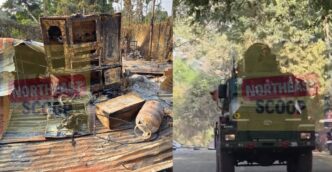
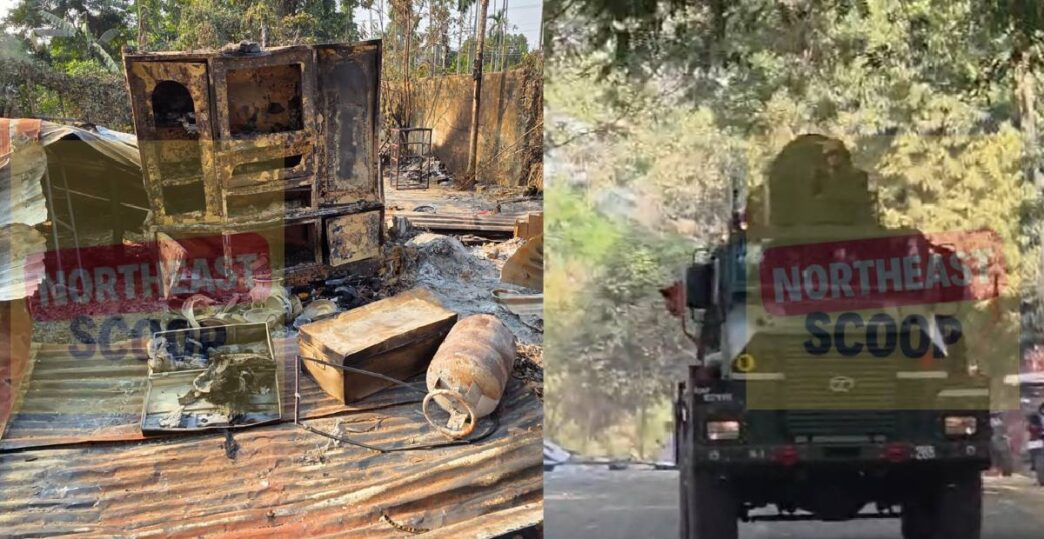
Two people were killed and dozens injured, including police personnel, after fresh violence erupted in the Kheroni area on Tuesday (December 23). Several shops and markets were set on fire, prompting authorities to suspend mobile internet services across Karbi Anglong and West Karbi Anglong districts. Prohibitory orders were imposed, and an Army flag march was conducted to contain the unrest and prevent further violence between the Karbi and Bihari communities.
The violence followed escalating tensions over land rights and political representation in a region governed by the Karbi Anglong Autonomous Council (KAAC) under the Sixth Schedule of the Constitution—meant specifically to protect tribal land, identity, and self-governance. 
From Political Marginalisation to Street Violence
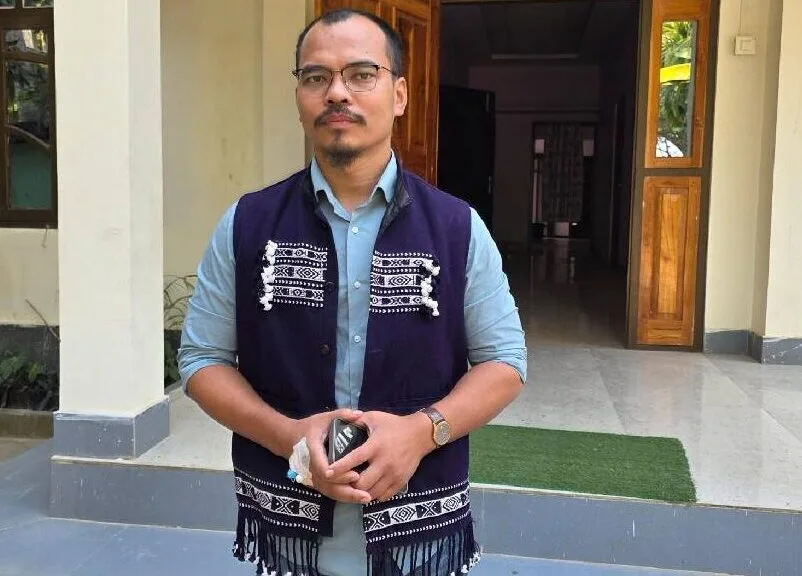
According to social activist Litsong Rongphar, what is unfolding in Karbi Anglong goes far beyond encroachment on Professional Grazing Reserve (PGR) and Village Grazing Reserve (VGR) lands.
“This is not just about land. This is about how political rights of Karbi people are being taken away. Karbi Anglong is a Sixth Schedule area, yet it is no longer protected,” Rongphar told Northeast Scoop.
He alleged that large-scale influx—mainly from UP and Bihar—has altered the demographic balance to such an extent that indigenous Karbis are increasingly losing control over their own autonomous council.
Out of 26 KAAC constituencies, Karbis are now a majority in only 10, while in the remaining constituencies non-tribal settlers dominate. Rongpher claimed that Karbis now constitute only around 35% of the total population in Karbi Anglong.
Hunger Strike at Phelangpi: The Immediate Trigger
The immediate trigger for the current unrest was a peaceful hunger strike that began on December 6, 2025, at Phelangpi in West Karbi Anglong. Nine people sat on a fast unto death, demanding eviction of alleged encroachers from PGR and VGR lands within the KAAC area.
People from all 26 constituencies of the autonomous council joined the protest, which Rongphar described as a collective effort “to build oneness and awareness” among Karbi people.
PGR and VGR lands—many demarcated during British rule—are legally protected tracts meant for livestock grazing and livelihood support for indigenous communities. Karbi tribal bodies have for decades demanded eviction of settlers from these lands, while settlers are mostly UP and Bihar and now claim they have lived there for generations.
Night Operation and Alleged Police Excess
According to Rongphar, the situation took a critical turn on the night of December 22, the 16th day of the hunger strike.
“The council had said they would discuss the issue with the protesters. But instead, at around 3 am, police came saying they were taking them for medical examination,” he said.
He alleged that the hunger strikers requested to be taken after sunrise, but police refused.
“They opposed being taken in the dark. Police brought many vehicles and played Christmas songs loudly, allegedly so villagers would not realise what was happening and would not come out to support the protestors,” Rongphar claimed.
Despite the availability of Diphu Medical College and Nagaon Medical College, the protesters were allegedly taken to Guwahati Medical College.
“All medical tests were normal, yet seven hunger strikers were forcibly admitted at GMCH on December 22 itself,” Rongpher said, adding that two protesters were not available at the time when police came.
He said he personally warned the DC and SP that forcibly removing protesters from a peaceful agitation could provoke a public backlash.
“I told them clearly that if the hunger strikers were taken away, people would come out in protest and the situation would become uncontrollable,” he said.
Arson and Escalation
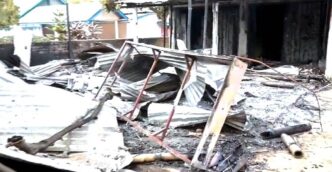
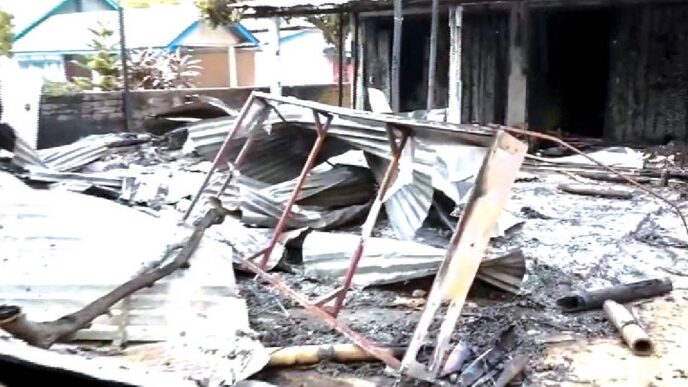
Public anger erupted the same day. Protesters torched the ancestral house of KAAC CEM and BJP leader Tuliram Ronghang at Dongkamukam, reducing it to ashes.
By the following day—December 23—the situation in Kheroni and surrounding areas spiralled into violent clashes, resulting in the deaths of two people and injuries to dozens.
Rongpher blamed the state government for the escalation.
“This violence is a result of government mismanagement. The administration failed to handle a peaceful protest sensitively,” he said.
Broken Promises and a Long-Standing Land Crisis
Rongphar recalled that before the last KAAC elections, Tuliram Ronghang had publicly promised—before political parties and social organisations—that the council would evict illegal settlers from PGR and VGR lands.
“In 1963, eviction took place without bulldozers—using elephants. At that time, outsiders were fewer,” he said.
He pointed out that Kheroni itself has a PGR, and that in Bokolia, eviction notices were issued to 1,000 households a month ago with a 15-day deadline. When eviction was not carried out, many people allegedly migrated towards Kheroni.
On the Diphu road, he alleged that 3,000 bighas of land belonging to the Soil Conservation Department have recently been encroached upon, mostly by people from UP and Bihar.
Encroachment Beyond PGR and VGR
Rongphar cited multiple instances of encroachment in Kheroni:
- 35 bighas of land belonging to a girls’ school allegedly encroached
- Encroachments on lands of the irrigation, agriculture, sericulture, and soil conservation departments
He alleged that such encroachments are not seen in Dima Hasao, another Sixth Schedule district, raising questions about selective enforcement.
Electoral Concerns and Kopili Constituency
The activist also questioned the conduct of KAAC elections, arguing that under the Constitution, autonomous councils should conduct their own elections, not the State Election Commission.
He cited the Kopili constituency as a critical example. According to him, Pawan Kuwar Rai, from BJP party, a KAAC member elected since 2017, is a resident of a PGR area and does not possess valid land pattas, yet was allowed to contest elections.
In Kopili: - Karbi population: ~10,000
- Total voters: ~40,000
- Settlers from UP and Bihar: ~20,000
- Remaining voters: Assamese communities
“How can someone without land records contest elections in a Sixth Schedule area? This shows how the system is being compromised,” Rongphar said.
“Sixth Schedule Exists Only on Paper”
Rongphar accused the BJP of betraying its promise to protect indigenous rights.
“BJP came promising jati, mati, bheti. But after coming to power, they ignored petitions, memorandums and protests. Instead, they are building a vote bank in Sixth Schedule areas. This is a direct attack on tribal identity and constitutional safeguards.”
As West Karbi Anglong remains tense, the crisis has laid bare a deeper conflict—one where land encroachment, demographic change, and political disenfranchisement converge, raising urgent questions about whether the Sixth Schedule still offers real protection to indigenous communities.