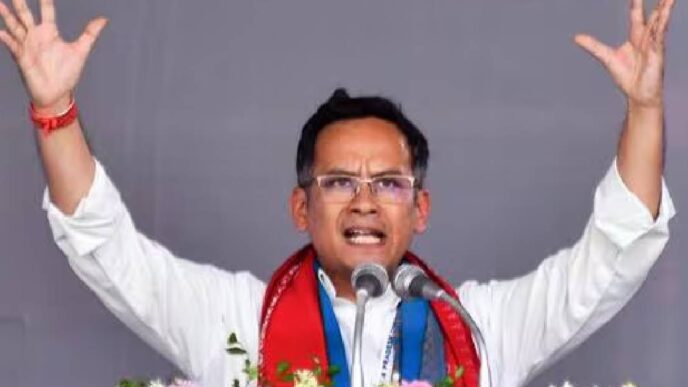


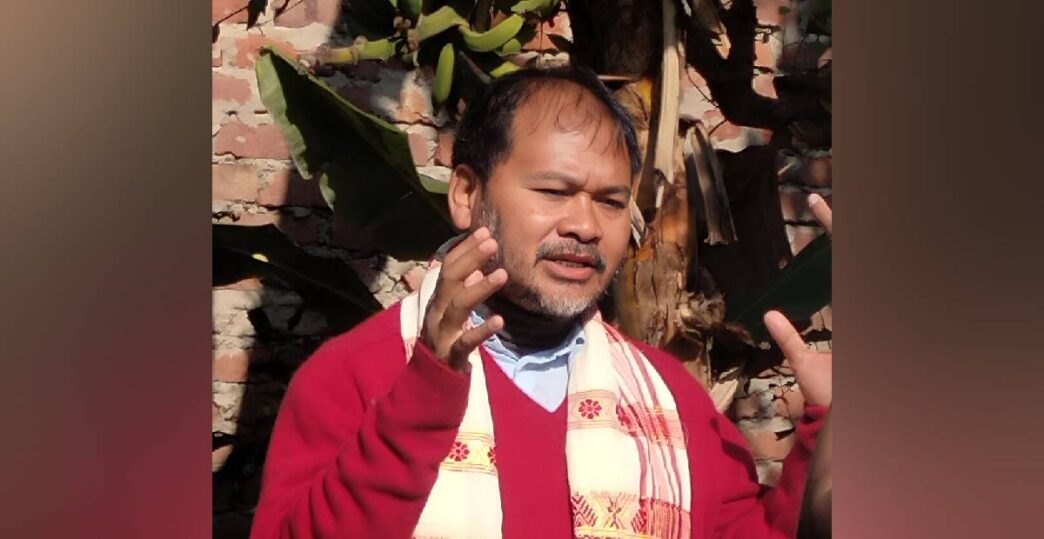
Sibsagar MLA Akhil Gogoi has criticised the charge sheet filed in the Zubeen Garg case, questioning whether it can deliver justice to the late singer. He alleged that the charge sheet is weak and incomplete, and claimed that it has been prepared for political reasons rather than to secure convictions, particularly ahead of the 2026 Assam Assembly elections.
Addressing the issue, Gogoi said the charge sheet was “a myth” and incapable of ensuring justice. He claimed that the accused were being kept in custody for political reasons and that they would gradually be granted bail after the elections. “A charge sheet submitted by the police cannot ensure justice for Zubeen Garg,” Gogoi said, calling it his final statement on the matter.
Raising serious questions about the investigation, Gogoi alleged that the charge sheet lacks strong evidence, reliable eyewitness accounts, and essential documents. According to him, the investigation was carried out under direct instructions from the Assam government, which, he claimed, compromised its independence. 
He further alleged that the investigation remains incomplete as neither the Chief Investigating Officer nor the SIT officers of the Assam CID visited the place of occurrence with the accused. No reconstruction of the incident was carried out, he said. Gogoi also claimed that no proper videography or photography was done at the crime scene to prepare a reliable sketch map. Instead, he alleged, the charge sheet was prepared in Guwahati without on-ground verification.
“Justice cannot be delivered by sitting in Guwahati and issuing statements,” Gogoi said, adding that noise and moral posturing cannot replace solid evidence required for conviction.
Gogoi also targeted Chief Minister Himanta Biswa Sarma, accusing him of changing his stand repeatedly on the legal feasibility of the investigation. He pointed out that the Chief Minister had earlier stated that a proper probe was not possible as the incident occurred outside India. Later, following public criticism, the Assam government reportedly sought permission under Section 208 of the Bharatiya Nagarik Suraksha Sanhita (BNSS).
However, Gogoi said that the government failed to invoke Section 112 of the BNSS, which allows courts to issue Letters of Request to foreign authorities for legally admissible evidence. Instead, he alleged that the government relied on Mutual Legal Assistance Treaties (MLATs), which he claimed are not admissible in court without proper legal routing.
Referring to findings by Singapore authorities, Gogoi said that they had concluded Zubeen Garg’s death was due to drowning and that no foul play was detected. This finding, he said, was also acknowledged by the Assam government earlier.
He further raised concerns over the “yacht angle” in the case, alleging that several key witnesses were never examined. According to him, statements of the yacht captain, doctors who first treated Zubeen, rescue personnel, and police officers involved were not properly recorded. He also questioned whether authorities were aware of Zubeen being an epilepsy patient and whether safety norms were followed.
Gogoi claimed that the charge sheet was designed to protect the accused and delay real legal scrutiny. “At the stage of framing charges, they will get bail because there is no evidence,” he said.