
The Bharatiya Janata Party (BJP) is preparing for a major change before the 2026 assembly elections. Sources close to the party’s top leadership say that around a dozen sitting ministers and MLAs many of them long-time members may not get tickets this time. Lawmakers who have not performed well and those above 60 are the main focus in what insiders call a ‘renewal drive’ to bring new energy into the party.
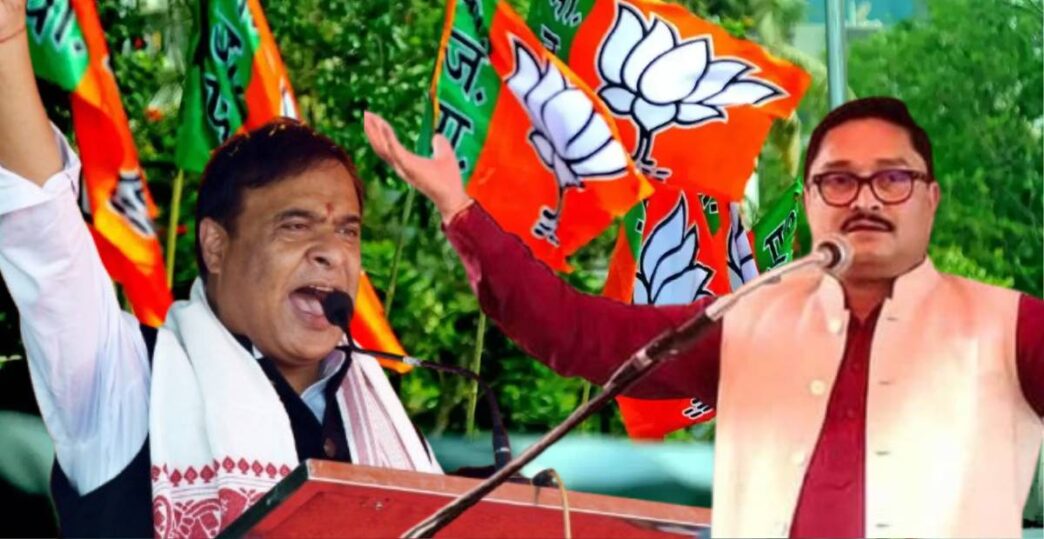
This is not just a routine internal review. It is a planned move to counter growing talk of anti-incumbency after almost ten years in power. Chief Minister Himanta Biswa Sarma, who led BJP’s rise in Assam since 2016 has been very clear about this and his focus is on youths this time.
The discussion picked up last month when a leaked strategy document appeared on local channels. The earlier slogan ‘Mission 100 Plus’ has been dropped. In its place is a new ideological line: ‘Sanatan Sabhyavata’ which is a call to protect Assam’s ancient cultural heritage from what the party sees as serious threats. It signals a focus on the state’s Hindu identity and aims to strengthen support in rural areas where identity politics is strong. 
The biggest spotlight is on ticket selection. BJP’s Assam president Dilip Saikia has clearly said that poorly performing MLAs should not expect tickets.
“MLAs who have not stayed connected with the people or met their targets will face the consequences,” Saikia said. Estimates say around 12 to 15 MLAs may lose their tickets, including senior leaders who have held their seats for years. The party is running a three-step survey in all 126 constituencies ; booth-level feedback, district audits and state reviews to judge MLAs on issues like development work and social media activity.
The Rashtriya Swayamsevak Sangh (RSS), the party’s ideological partner is deeply involved in this process. Its members are visiting villages and asking locals about their MLAs’ performance. The reports covering assembly attendance, complaint redressal and even flood relief work will decide final ticket distribution by early next year.
Age is also a major factor. Sarma, who often jokes about the ‘dada brigade’ may support a soft rule that those above 60 should step aside. One of the most talked-about names is Chandra Mohan Patowary, the 70-year-old Environment and Forest Minister and a long-time BJP figure since the AGP era.
Patowary, who turned 70 last October has been a steady member of Sarma’s cabinet and has led several green initiatives. But with three Rajya Sabha seats opening next year, insiders say he may be shifted to Delhi as a respectful exit.
Others who may be affected include Jorhat MLA Hitendra Goswami and Guwahati MLA Siddhartha Bhattacharya both nearing 60 and facing criticism for uneven work in their constituencies. Goswami has been blamed for slow tea garden reforms in upper Assam, while Bhattacharya’s urban constituency continues to struggle with traffic and waste issues.
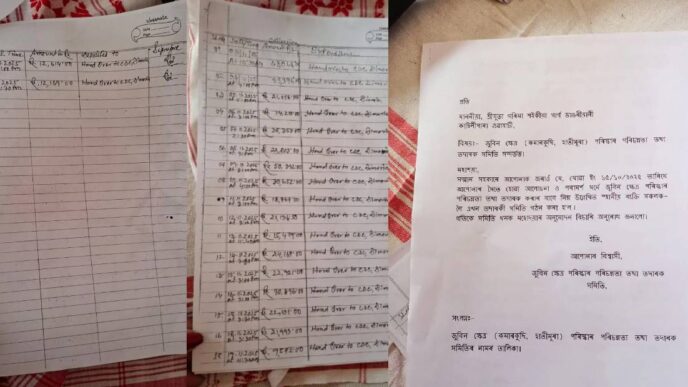
Another key figure is Atul Bora, the Asom Gana Parishad (AGP) chief and an important NDA ally. Though not a BJP MLA, his recent statements have created tension. In the sensitive Zubeen Garg case, the death of Assam’s beloved singer in September declared a suicide but linked to poisoning allegations. Bora demanded a high-level inquiry, calling it a ‘sub-judice matter’ that required transparency.
But Sarma replied to this and accused some leaders of showing ‘fake sympathy’ while also taking a dig at ‘Miya’ politics.
Zubeen, known for bringing Hindu and Muslim communities together through his music, became a symbol of unity after his death. Bora’s remarks viewed by some as going against the NDA’s position have led to talk that AGP’s seat share may be reduced.
This review is happening at a time when Assam’s politics faces ethnic tensions, flood problems, and migration concerns. The BJP first came to power in 2016 promising to protect ‘jati, mati, bheti’ from illegal migration mainly from Bangladesh. Ten years later, with the Citizenship Amendment Act (CAA) in place and border fencing continuing, the party feels stronger. But there are challenges such as joblessness in rural areas, rising prices in cities and an opposition preparing a comeback.
The party is now focusing on youth and women. Sarma has promised to give priority to leaders under 40 and more female candidates selecting many from the BJP’s Yuva Morcha and Mahila Morcha. This follows the party’s national trend as Prime Minister Narendra Modi has often supported new leaders to counter family-based parties like Congress. In Assam, this means many senior leaders may be replaced.
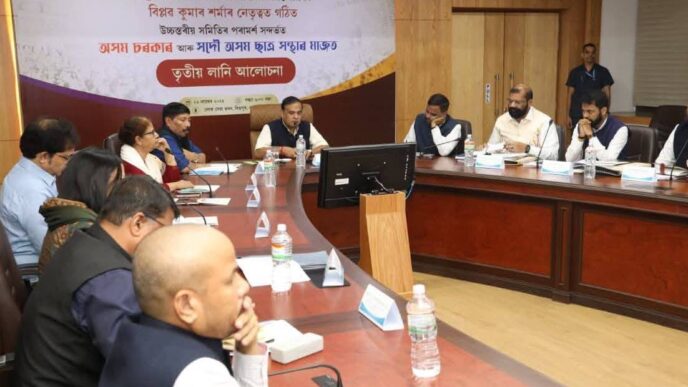
The seat-sharing plan is also tough. In a core committee meeting attended by BJP national secretary B.L. Santhosh on November 21, the party finalized a plan to contest 103 out of 126 seats under the NDA banner.
Allies like the Bodo People’s Front (BPF), United People’s Party Liberal (UPPL) and Rabha Hasong Joutha Mancha (RHJM) will get the remaining 23 seats as ‘token representation.’ The BJP believes it has a strong hold on 103 seats. But tensions exist in the BTC as UPPL’s Pramod Boro has questioned BJP’s growing closeness with BPF saying it may divide Bodo votes.
However, Sarma remains confident. “We will sweep the polls,” he said at an event in Dibrugarh and also took a swipe at Congress leader Gaurav Gogoi: “If we lose, he’ll be fighting elections in Pakistan.”
Gogoi, the Assam Congress president, responded warning about ‘imported voters’ from Uttar Pradesh and Bihar weakening the Assamese voice.
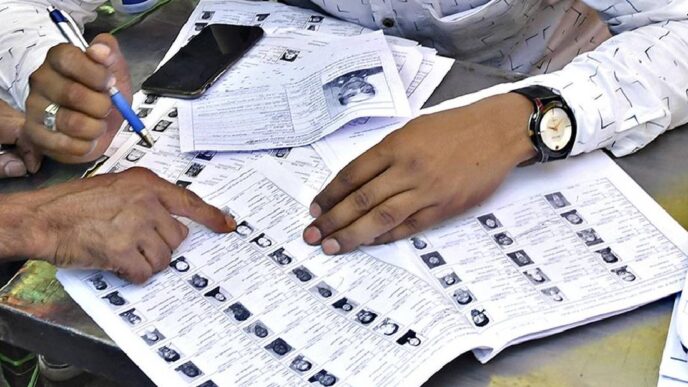
Voter lists are always a sensitive issue in Assam. The Election Commission recently allowed last-minute additions for migrants arriving two days before polling, a move Congress says will help the BJP gain extra votes.
BJP’s ‘Sanatan Sabhyavata’ slogan is meant to strengthen Hindutva without upsetting tribals or Christians, who form 15% of the voters. By taking a firmer stand on ‘Miya’ communities often seen as encroachers, the party aims to energize its base in the Brahmaputra valley. But there is risk: Zubeen’s death led to rare unity rallies where even BJP workers marched with Muslim groups demanding justice.
Social media is now a major campaign tool. All ministers must post daily updates on schemes like Orunodoi or PM Awas Yojana monitored directly from Delhi. Those who do not follow this will get a poor performance score.
For many senior leaders, this is a tough phase. Several joined BJP after 2016, leaving Congress or AGP and now feel that their loyalty is being overlooked.
Opposition parties see an opportunity. Gogoi’s Congress working with six other parties including CPI(M), says it wants to ‘save Assam’s soul.’
AIUDF chief Badruddin Ajmal aiming for Muslim votes says the ticket cuts show ‘BJP’s panic.’ But the opposition also faces problems like internal fights and weak local networks.
As the surveys continue, the party is expected to act slowly at first; quiet retirements, Rajya Sabha postings or other positions. By March 2026, when elections arrive, Assam may see more new BJP candidates and all those young, active and without anti-incumbency baggage.
Is this renewal or fear?
If the plan works ; 103 seats, young candidates and strong RSS support, the BJP may win a third term. But in politics, like Assam’s monsoons, one mistake can cause a flood.
For now, senior leaders wait in party offices looking over survey reports. The message from the top is clear: adjust or step aside. The 2026 battle has begun and this time not with loud slogans but with careful decisions.