
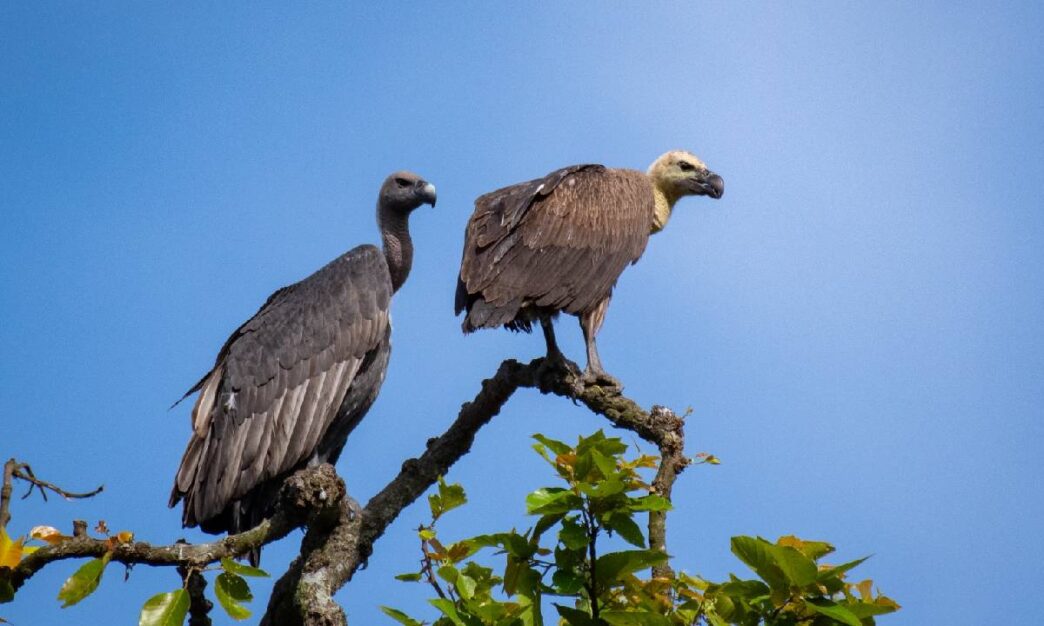
A major conservation step is now underway in Assam with authorities approving the release of critically endangered vultures into Kaziranga National Park. The Central Zoo Authority of India has given permission to move 30 White-rumped Vultures and five Slender-billed Vultures from the captive breeding centre at Rani in Guwahati to the 6th Addition area of the national park under the Bishwanath Wildlife Division.
The approval marks the first release of captive-reared vultures from Assam into the wild. Both species are classified as Critically Endangered by the IUCN and have legal protection under India’s Wildlife Protection Act. Officials said the release plan has been developed through coordination between the Assam Forest Department, the Bombay Natural History Society and the Kaziranga authorities.
Chief Minister Himanta Biswa Sarma informed about the development through a social media post and described it as an important step for conservation. He also appreciated the efforts of all officials and organisations involved. The Chief Minister mentioned that vultures are important for maintaining ecological balance and referred to their traditional presence in Indian history and culture. 
For many years, Assam has remained one of the few states where slender-billed vultures are still found in breeding numbers, especially around the Kaziranga landscape. However, their population has dropped sharply in the last three decades. Conservationists say the decline was mainly due to the use of diclofenac, which poisoned vultures feeding on treated cattle carcasses.
Large vulture declines were reported across India between the 1990s and 2000s, and several species lost more than 95 percent of their population. Some species almost vanished, making the fall one of the fastest recorded for any group of birds. Although diclofenac is now banned for veterinary use, experts believe complete recovery will take many years and requires release programmes such as the one now planned in Assam.
The release site in the 6th Addition of Kaziranga was chosen because of its protected forests, food availability and monitoring systems. A special aviary has been prepared near Tewaripal forest camp. The birds will be kept in the aviary for a period before they gradually move out into the forest. This slow method is known as soft release and aims to help the vultures adjust to natural conditions.
Alongside the release plan, officials and conservation groups have been conducting awareness activities with local communities, schools and veterinary professionals on the importance of vultures and the risks posed by harmful drugs. These programmes are meant to reduce poisoning incidents and support safer veterinary practices in the area.
The breeding centre at Rani, run by the Forest Department and BNHS, has been working for more than a decade and has played a major role in conserving vulture species in the region. BNHS has indicated that a limited release will begin first, followed by larger releases in the coming years in Kamrup and Bishwanath districts.