
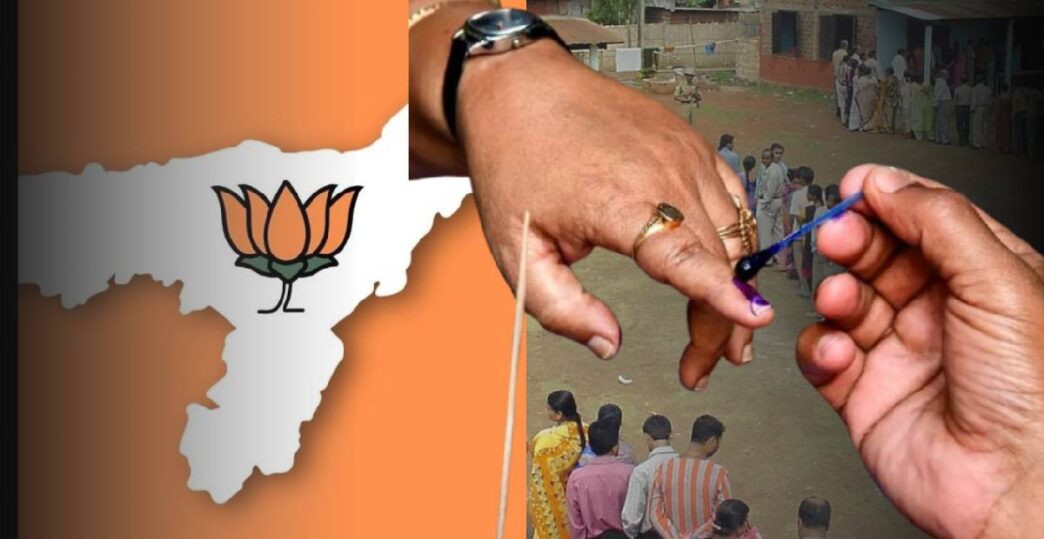
Imagine this: A migrant worker from Bihar or Haryana arrives in Assam just two days before the 2026 Assembly elections. He fills a form, gives a casual assurance that he plans to “stay,” and within hours finds his name added to Assam’s voter list. No long-stay proof, no rigorous verification, no clarity on whether his name has been deleted from his home state.
This is not a hypothetical alarm. This is the core concern behind the Election Commission of India’s Special Revision of Assam’s electoral roll—announced immediately after the Bihar polls ended—raising sharp questions about timing, intent, and transparency. With the Assam government under Chief Minister Himanta Biswa Sarma welcoming the move, fears are growing that this could pave the way for outsider voters to tilt the 2026 mandate.
And it comes during a period when Assam is still recovering from the NRC trauma and navigating anxieties around CAA, both of which have already shaken Assamese confidence over identity and demographic stability. 
What’s new in the “Special Revision” and why it alarms Assam
Normally, the ECI conducts an annual summary revision: adding 18-year-olds, updating addresses, removing deceased voters. But this time, the Special Revision allows:
• Anyone claiming to be a long-term resident to shift their votes to Assam using Form 8
• Minimal verification, largely dependent on a Booth Level Officer’s quick visit
• No concrete mechanism to ensure their names are deleted from previous voter lists
• Names to be added even days before the election
Critics call this an open invitation for “floating voters” — seasonal workers, travelers, or politically mobilised groups from other states — to influence Assam’s election results.
Workers from other states frequently move in and out of Assam for construction, service work, or political campaigns. Without strict residency verification, nothing stops them from adding their names here, voting once, and disappearing.
ECI’s clarifications on November 19 insisted that only genuine long-term residents can shift their names, but the rules do not specify what proof is mandatory. Rent slips? Job letters? Or just a verbal claim?
The ambiguity is what fuels the fear.
BJP defends move, calls opposition “Scared of Losing 2026”
Assam BJP spokesperson Kishore Upadhaya, speaking exclusively to Northeast Scoop, dismissed all concerns.
“This is nothing new. The Election Commission has done this since 1947–52. Congress is scared of losing in 2026; that’s why they’re crying foul.”
He emphasised the process: application, BLO visit, draft publication, objections.
“If a name looks fake, complain. Outsiders voting wrongly will hurt BJP too.”
He claimed even professionals from Delhi or Bengaluru living in Assam long-term should have the right to vote here.
But his explanation avoids the key question:
How will the ECI determine the legitimacy of a ‘long stay’ claim?
A rented room for a week qualifies? A casual declaration?
Opposition leaders say BJP’s confidence about “clean sweep 2026” feels suspiciously aligned with a sudden loosening of voter entry gates.
Congress hits back: “This is borderless voting, an attack on Assamese rights”
Leader of Opposition Debabrata Saikia minced no words.
“This is borderless voting. Assam must decide its own government. Not outsiders who arrive for two days.”
Saikia supported ECI rules in theory but demanded airtight verification:
• Strong proof of residence
• Transparent deletions from previous state lists
• No special revision so close to elections
He pointed to Rahul Gandhi’s Bihar revelations — rooms of 80 sq ft hosting 100 “voters” — warning Assam could face the same.
His proposal:
Use 2024 electoral rolls for the 2026 polls and stick to annual summary updates.
Bhupen Borah: “A knife to Assamese identity”
Congress campaign chief Bhupen Borah was blunt:
“This is dangerous and unfair — a knife to Assamese identity.”
He highlighted the nightmare scenario:
“A person votes in Bihar, travels to Assam in March–April, adds their name two days before elections, and votes again. Who deletes their old name?”
He questioned how CM Sarma confidently predicts a “clean sweep” without this mechanism benefiting BJP.
Regional parties and students unite in anger
AJP president Lurinjyoti Gogoi called it an “existential threat.”
“This revision allows lakhs of outsiders to join the list. Even a few days’ stay is enough. This will permanently change our demographic balance.”
He confirmed ongoing talks with Akhil Gogoi’s Raijor Dal for united resistance.
From the student front, AASU slammed the move as:
“A deadly plan to let drifters and two-day arrivals decide Assam’s future.”
Their warning carries weight — AASU has historically led Assam’s biggest identity movements.
Context matters: Assam’s NRC, CAA scars still fresh
2019’s NRC excluded 19 lakh people, tearing families apart and leaving lakhs in legal limbo. CAA stirred mass protests, with Assamese groups arguing it endangered local culture and indigenous rights.
Now, with NRC unresolved and CAA still a wild card, this voter revision feels to many like the final blow.
For critics, it adds up:
• NRC failures eroded trust
• CAA fears opened the door to more outsiders
• Now, a Special Revision threatens the electoral power of Assamese people
The pattern looks like dilution of local voices through administrative manoeuvres.
The unanswered questions
To Chief Minister Himanta Biswa Sarma:
• How is your “clean sweep 2026” promise unrelated to this sudden revision?
• What exactly is “proof of long stay”?
• If thousands double-vote across states, who is accountable?
To the Election Commission of India:
• Why a Special Revision after Bihar polls?
• Why not wait until post-2026, as in other states?
• What system ensures automatic deletion of old entries?
To BJP’s Kishore Upadhaya:
• If this is normal, why the timing?
• Why the uncertainty around verification norms?
The larger battle: Identity, Democracy and Assam’s future
This isn’t BJP vs Congress.
This is Assam vs an opaque electoral experiment.
From Congress leaders to AJP and AASU, the message is unanimous:
• Stop the Special Revision now
• Use 2024 rolls for 2026 elections
• Make residency proof mandatory and non-negotiable
• Ensure deletion from previous state lists
Assamese people have guarded their identity for generations.
A two-day loophole cannot decide the future of this land.
If democracy means anything, it must start with the legitimacy of those who vote.