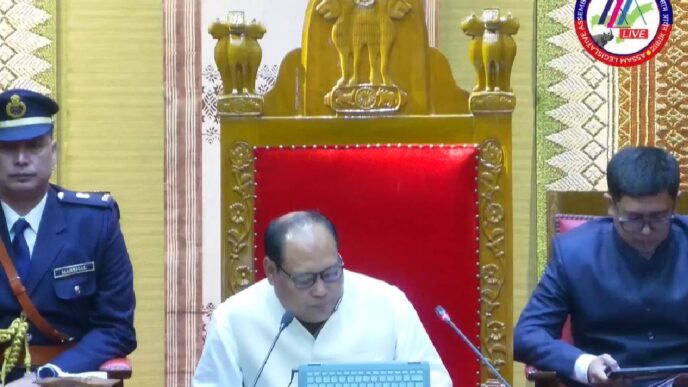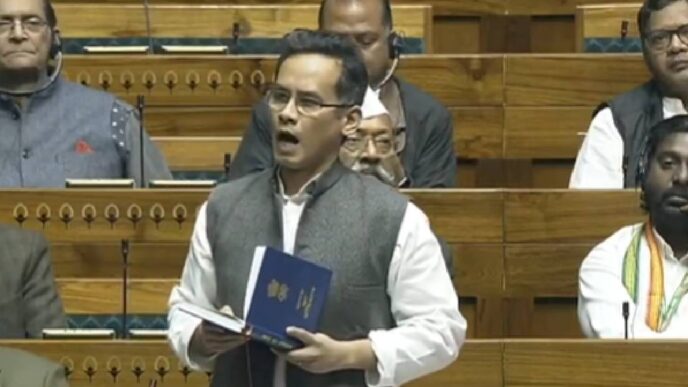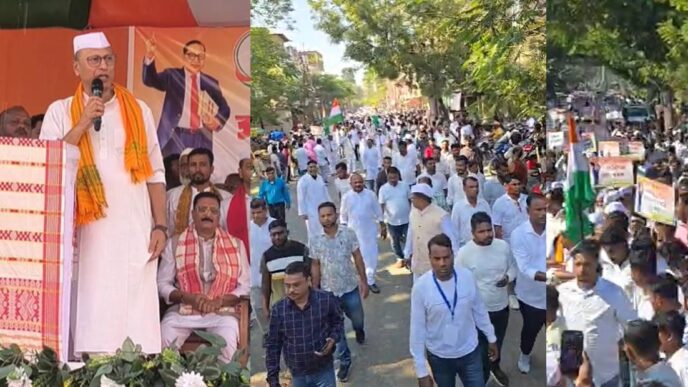

The Assam Legislative Assembly started its winter session on November 25, 2025 and one of the first things that happened was the distribution of the Tewary Commission report. This report looks into the violence that took place in Assam in 1983, including the Nellie massacre. Copies were given to all members of the legislative assembly or MLAs for the first time since it was submitted over four decades ago. The government also placed the Mehta Commission report on the table of the house.
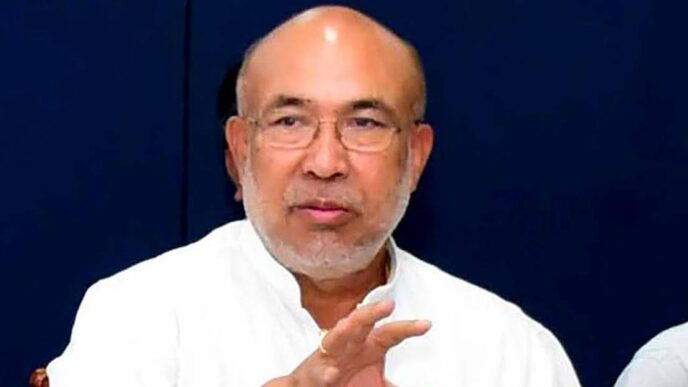
Assam Chief Minister Himanta Biswa Sarma said the cabinet had decided to share both reports with MLAs in hard and soft copies. “These documents are part of our history and it’s good for people to know about them,” he said. There was no discussion on the reports during the session, as per the government’s plan.
What is the Tewary Commission? 
It was set up on July 14, 1983, by the Congress government under Chief Minister Hiteswar Saikia. The full name is the Commission of Enquiry on Assam Disturbances 1983. It was led by Tribhuvan Prasad Tewary, a retired Indian Administrative Service officer from Uttar Pradesh. The commission’s job was to find out what led to the violence between January and April 1983, check if the authorities did enough to stop it and suggest ways to avoid such problems in the future.
The commission talked to 257 witnesses and submitted its 548-page report in May 1984. It was placed in the assembly in 1987 by the Asom Gana Parishad government under Prafulla Kumar Mahanta, but only one copy went to the Speaker’s office. No copies were given to MLAs or made public. Now, with the BJP-led government in power and AGP as a partner, the report has been printed and shared.
To understand why this report is important, we need to look back at what was happening in Assam in the early 1980s. The state was going through the Assam Agitation, a movement from 1979 to 1985 led by the All Assam Students’ Union (AASU) and the All Assam Gana Sangram Parishad (AAGSP). The main issue was illegal migration from Bangladesh. People in Assam worried that too many migrants were coming in, taking jobs, land and changing the balance of the population.
Census data showed changes over the years. In 1951, Bengali speakers made up about 24 percent of Assam’s population. By 1971, this had gone up to around 28 percent. The Tewary report points out that the number of people per square kilometer of land increased, putting pressure on resources. Locals felt their farmlands were being taken over and they were losing out in jobs and politics.
This tension led to smaller clashes in the 1960s and 1970s over language and jobs. Things got worse in 1983 when the central government decided to hold assembly elections in February, even though the agitation leaders called for a boycott. Prime Minister Indira Gandhi’s Congress party wanted to go ahead with the polls. They added about four million Bengali-origin people to the voter list, which the agitators saw as a way to favor migrants.
The elections were held under President’s Rule because the state government had been dismissed. Security forces were deployed, 400 companies of central forces and 11 army brigades but violence broke out anyway. Polling stations were attacked, roads blocked and fights happened between groups. The Tewary report says the violence was not just about the elections. It had built up over years due to issues like land and identity.
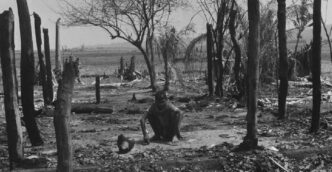
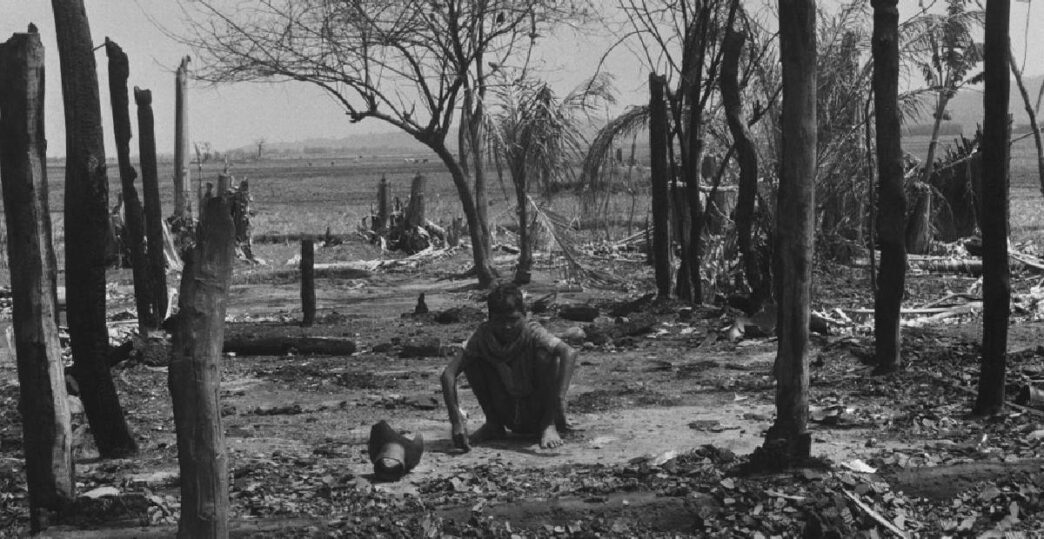
The worst part was the Nellie massacre on February 18, 1983, in what is now Morigaon district (then part of Nagaon). In Nellie and 14 nearby villages like Alisingha, Khulapathar and Borbori, groups of Tiwa (also known as Lalung) people attacked Bengali-speaking Muslim families who had been living there since the 1930s. The attacks started in the morning and lasted about seven hours. People used sticks, spears and machetes. Houses were burned and families were trapped because roads were blocked.
The official police count is 1,819 deaths in Nellie, mostly women and children. The Tewary report gives a figure of 2,072 killed in those villages, including 235 from police firing. Other estimates go up to 2,000 to 3,000. Across the state, the 1983 violence led to over 2,000 deaths and left about three lakh people in relief camps for months.
The Tewary report says the violence did not have a communal angle, meaning it was not just Hindus against Muslims. In some places, Assamese people were attacked by Bengali speakers, and in others, it was the other way around. Both Hindus and Muslims suffered. The main reasons were economic, like fights over land, and the fear among locals of being outnumbered.
The report blames AASU and AAGSP for starting the agitation in a planned way, which led to arson, strikes, and sabotage. It says the movement got out of hand. The government and police are also criticized for not doing enough. For example, on February 15, a police officer in Nagaon sent a wireless message warning that about 1,000 Assamese villagers were gathering with weapons near Nellie, and Muslims were scared. The message went to several officers, but no quick action was taken. One warning sat unread in a police station basket.
The commission suggests setting up task forces to identify and remove illegal settlers from sensitive areas. It also calls for better land laws to protect locals.
The Mehta Commission report offers a different view. It was not set up by the government but by the Assam Freedom Fighters’ Association and agitation leaders in January 1984. Led by retired Justice T.U. Mehta, former Chief Justice of Himachal Pradesh High Court, it looked into the violence around the 1983 elections. The group felt the Tewary inquiry was too focused on administration and not enough on the full story.
The Mehta report says the elections were the main cause of the violence. It blames the central government for forcing the polls despite the boycott and the tense situation. The report notes that electoral rolls were not updated properly, and outside officers had to conduct the voting. It criticizes the Election Commission for not stopping the process. The death toll in Nellie is put at 3,000, mostly Bengali Muslims.
It also points to attacks by Bengali Muslims on Assamese and Tiwa people starting from February 13, which led to the backlash in Nellie.
Both reports agree on the “foreigners issue” as a big problem but differ on blame. The Tewary report does not fault the elections alone, while Mehta does. The Mehta report also says the state became like a “police state,” with forces arresting agitation leaders and hurting people who opposed the polls.
Why bring these reports out now? The winter session has 27 bills to discuss, including the Assam Prohibition of Polygamy Bill, 2025, which aims to ban polygamy except in tribal areas under the Sixth Schedule. There is also a bill to give land rights to 3.33 lakh tea tribe families in 825 gardens. But the reports have drawn attention because assembly elections are due in 2026.
Some see it as a way for the BJP government to highlight past mistakes by Congress, like holding elections in 1983. AASU has welcomed the Mehta report, saying it shows all sides. Opposition Congress leader Debabrata Saikia said the Tewary report was already tabled in 1987, so there was no need to recirculate it. He called tabling a private report like Mehta’s unusual.
Civil society groups have mixed views. Survivors from Nellie, through groups like the Nellie Survivors’ Association, say it’s good the reports are out, but they want justice. After the massacre, 688 cases were filed, but 378 were closed for lack of evidence, and the rest dropped under the 1985 Assam Accord. No one was convicted.
The Assam Accord ended the agitation by setting March 24, 1971, as the cut-off for detecting foreigners. It led to the National Register of Citizens in 2019, but debates continue on migration and borders. The reports remind us of those issues.
For ordinary people in Assam; farmers in Morigaon villages or workers in Guwahati these events are not just history. Many families still feel the loss. Sharing the reports is a step to learn from the past and work on solutions like better land management and community talks.
The session will go on for five days, with more bills on land tribunals and university fees. As MLAs read the reports, it could help in understanding how to keep peace in a state with many communities.